Low dose tirzepatide can be followed by hair loss, and the clinical trial data give little reason to think a lower dose removes that risk on its own. In the placebo controlled trials summarized in the Zepbound prescribing information, hair loss was reported in 5% of people on the lowest maintenance dose (5 mg), 4% on 10 mg and 5% on 15 mg, compared with 1% on placebo.
The label links hair loss to weight reduction rather than to drug level, which shifts the useful question toward how fast weight is changing and whether nutrition is keeping up.
Key Takeaways
- In the pooled Zepbound weight reduction trials, hair loss was reported in 5% of people on 5 mg, 4% on 10 mg and 5% on 15 mg, versus 1% on placebo, so the lowest maintenance dose did not show a lower rate.
- The Zepbound label states that hair loss in tirzepatide treated patients was associated with weight reduction, and no tirzepatide treated patient in those trials stopped treatment because of it.
- Women reported hair loss far more often than men in the same trials, at 7.1% of women versus 0.5% of men on tirzepatide.
- No clinical trial has measured hair loss at microdose tirzepatide levels below the labeled doses, so any claim that microdosing prevents hair loss is not established.
- Shedding linked to weight loss is usually telogen effluvium, a nonscarring pattern that the American Academy of Dermatology says tends to regain normal fullness within six to nine months.
Can low dose tirzepatide cause hair loss?
Low dose tirzepatide can be followed by hair loss, although the trials cannot prove the drug causes it directly. The best controlled numbers come from the Zepbound prescribing information, which pools two randomized, double blind, placebo controlled trials covering 2,519 adults with obesity or overweight treated for up to 72 weeks.
In that pool, the 5 mg arm (the lowest maintenance dose on the label) had the same hair loss rate as the 15 mg arm, and the three maintenance doses sit in a narrow band with no clear step down as the dose falls.
Figure 1
Hair Loss Reported by Dose in the Pooled Zepbound Weight Reduction Trials
Source: Zepbound (tirzepatide) prescribing information, Section 6.1, Table 1 (pool of Study 1 and Study 2; placebo N=958, 5 mg N=630, 10 mg N=948, 15 mg N=941), via DailyMed.
A 2026 meta-analysis by Cheng and Chang in Diabetes Research and Clinical Practice reached a similar conclusion for the GLP-1 class as a whole. Pooling 9 interventional studies with 4114 GLP-1 receptor agonist users, the authors found a risk ratio for hair loss of 3.252 compared with placebo and an overall event rate of 3.9%.
Does a lower tirzepatide dose mean less hair loss?
A lower tirzepatide dose has not been shown to mean less hair loss. Within the labeled range of 5 mg to 15 mg the trial rates were 5%, 4% and 5%, which does not support the idea that dropping from 15 mg to 5 mg reliably protects hair.
The trials were not designed to study hair, and the label figures are crude percentages rather than a formal dose response analysis. A 2026 review in Dermatology and Therapy by Piraccini and colleagues adds that most evidence on GLP-1 drugs and hair comes from pharmacovigilance databases and retrospective cohorts, that no prospective controlled study has specifically evaluated hair loss, and that the role of dosing still needs research.
Why does tirzepatide cause hair loss at any dose?
Tirzepatide related hair loss appears to be driven mainly by weight loss rather than by a direct effect of the drug on hair follicles, and the Zepbound label states plainly that hair loss in tirzepatide treated patients was associated with weight reduction.
A sudden physical stress such as rapid weight loss can push a large group of growing hairs into the resting phase at the same time, and those hairs then fall out together some weeks later in a pattern called telogen effluvium. The American Academy of Dermatology lists losing 20 pounds or more among the triggers and notes that most people notice the extra shedding a few months after the event.
Weight loss surgery shows the same link at a larger scale. A 2025 meta-analysis in Obesity Surgery covering 41 articles with 7044 patients found hair loss after bariatric surgery in 47% of patients.
Nutrition appears to be the second piece, since a 2026 meta-analysis of 29 articles by Ahmed and colleagues found significantly lower serum ferritin and vitamin D in people with telogen effluvium than in healthy controls, and a separate 2026 meta-analysis by Viquez Burboa and colleagues concluded that alopecia linked to GLP-1 drugs is primarily mediated by micronutrient deficiency during weight loss. For more on the hair cycle and why most shedding grows back, see our guide to hair shedding on tirzepatide.
Figure 2 · Illustration
How Weight Loss Can Lead to Telogen Effluvium
Illustration based on the American Academy of Dermatology description of excessive hair shedding (aad.org). Not to scale.
Does low dose tirzepatide still cause meaningful weight loss?
The lowest maintenance dose of tirzepatide still produced large weight loss in trials, which helps explain why it was not spared from hair loss. In SURMOUNT-1, published in the New England Journal of Medicine in 2022, mean weight reduction at week 72 was 15.0% on 5 mg, 19.5% on 10 mg and 20.9% on 15 mg, compared with 3.1% on placebo.
Figure 3
Mean Weight Reduction at Week 72 by Dose in SURMOUNT-1
Source: Jastreboff AM et al., Tirzepatide Once Weekly for the Treatment of Obesity (SURMOUNT-1), New England Journal of Medicine 2022 (doi.org/10.1056/NEJMoa2206038).
Can microdosing tirzepatide cause hair loss?
Microdosing tirzepatide could plausibly be followed by hair loss, but no trial has measured it, so the true rate is unknown. Microdosing usually describes doses below the labeled schedule, which itself starts at 2.5 mg once weekly for 4 weeks, and the label is explicit that 2.5 mg is for starting treatment and is not approved as a maintenance dose.
If weight loss is the main trigger, a protocol that produces slower or smaller weight change might put less stress on the hair cycle. That is a reasonable hypothesis rather than a finding, and someone on a low dose who still loses weight quickly or eats very little may shed just as much as someone on a standard dose. Our article on how microdosing differs from standard GLP-1 doses covers what is and is not known about lower dose protocols.
Does compounded tirzepatide cause hair loss?
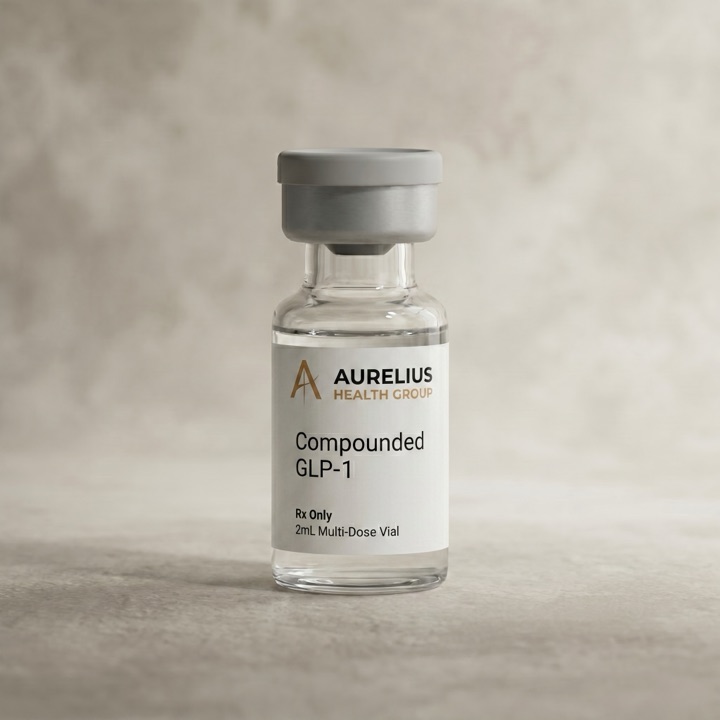
Compounded tirzepatide has not been studied for hair loss in its own trials, so there is no separate rate to quote. Because the evidence links hair loss to weight reduction rather than to a formulation, the same factors are likely to matter.
Who is more likely to lose hair on tirzepatide?
Women appear to be considerably more likely than men to report hair loss on tirzepatide. In the pooled Zepbound trials, hair loss was reported in 7.1% of women versus 0.5% of men on tirzepatide, and in 1.3% of women versus 0% of men on placebo. The trial population was 37% male, and the reasons for the gap were not studied.
Figure 4
Hair Loss by Sex in the Pooled Zepbound Trials
Source: Zepbound (tirzepatide) prescribing information, Section 6.1, Hair Loss, via DailyMed.
Large observational studies suggest the signal is not unique to one drug. The Viquez Burboa meta-analysis, covering 17 studies and 1,091,743 patient exposures, found a pooled odds ratio of 1.40 for nonscarring alopecia with GLP-1 drugs and a reporting odds ratio of 1.73 for tirzepatide. A TriNetX cohort study by Neubauer and colleagues reported a higher risk of telogen effluvium with tirzepatide than with other weight loss medications. Observational data like these cannot separate the drug from the weight loss it produces.
Figure 5
Pooled Odds Ratios for Hair Loss Types With GLP-1 Drugs
Source: Viquez Burboa GU et al., GLP-1 Receptor Agonists and Alopecia: A Systematic Review and Meta-Analysis, Skin Appendage Disorders 2026 (doi.org/10.1159/000553070). OR: odds ratio; aOR: adjusted odds ratio; ROR: reporting odds ratio.
Is hair loss from tirzepatide permanent?
Hair loss linked to tirzepatide usually follows the telogen effluvium pattern, which is typically temporary because the follicles remain intact. In the Viquez Burboa analysis the association was driven by telogen effluvium and androgenetic alopecia, while alopecia areata, an autoimmune form, was not significantly increased. Persistent thinning, patchy bald spots or scalp pain deserve a dermatology review.
What helps reduce hair loss on tirzepatide?
The steps most likely to help target the weight loss trigger and related nutrition gaps, although evidence for specific interventions in tirzepatide users is limited.
- Eat enough protein and total food. Reduced appetite makes it easy to under eat, and a sustained shortfall is a common thread in weight loss related shedding.
- Ask about iron and vitamin D. A blood test can show whether either is low, and a clinician can advise on correcting it.
- Discuss the pace of weight loss. If shedding is significant, a provider may review the titration schedule, which is a clinical decision rather than one to make alone.
- Be skeptical of biotin. A 2024 review by Yelich and colleagues concluded that biotin for hair is not supported by high quality studies.
- Keep resistance training in the plan. Our article on tirzepatide and exercise explains why lifting tends to matter on a GLP-1.
The AAD notes that shedding 50 to 100 hairs a day is normal, so a few strands in a brush are not a warning sign on their own, while clumps or patches are worth reporting.
Frequently asked questions
The bottom line
For anyone on low dose tirzepatide, the most useful finding is that dose did not separate the people who lost hair from those who did not, since 5 mg carried the same 5% rate as 15 mg and the label ties the effect to weight reduction. Microdosing has never been tested for hair outcomes, and the practical levers are eating enough, checking iron and vitamin D, and reporting shedding early.
Take the next step
Talk with a licensed provider
A 2 minute intake connects you with a licensed provider who reviews your health history and discusses whether treatment is appropriate for you.
$89 first month, then $199/month. Cancel anytime.
Start Your Journey Prescription only if clinically appropriate.