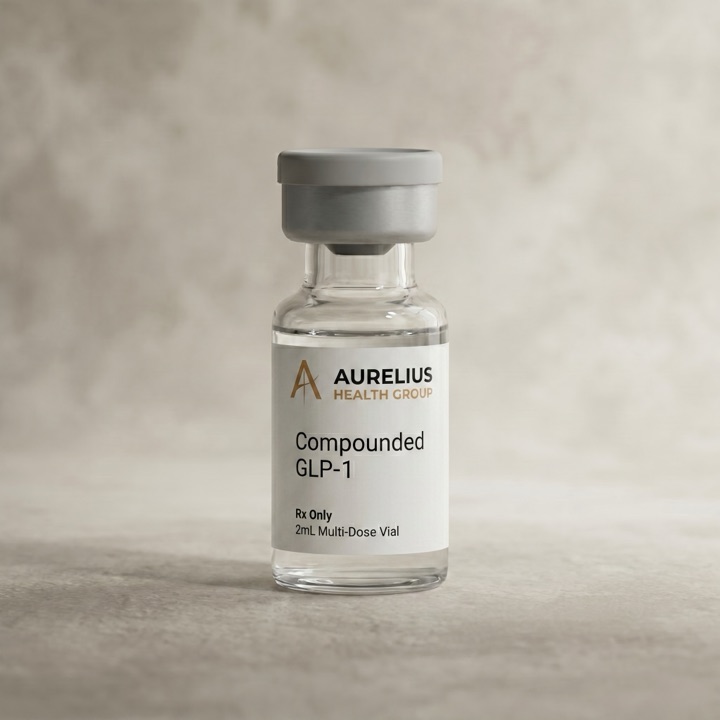
The most common question from anyone starting tirzepatide is some version of "when will I notice something?" The honest answer has three parts, because tirzepatide does three different things on three different clocks. Appetite changes tend to show up within the first one to two weeks. Measurable weight loss tends to appear within the first month, although it is modest at the starting dose. The larger results reported in the clinical trials take months to build and continue accruing for well over a year.
This article walks through that timeline month by month using the SURMOUNT and SURPASS trial data and lays out the milestones clinicians use to judge whether treatment is on track. It is educational rather than individualized advice, responses vary widely, and the prescribing clinician is the right person to interpret any one person's progress.
Key Takeaways
- Tirzepatide begins reducing appetite within the first one to two weeks for most people, even at the 2.5 mg starting dose, because the drug reaches meaningful blood levels after the first injection and approaches steady state after about four weekly doses.
- Measurable weight loss in the SURMOUNT-1 trial was visible by week 4, but the starting dose is designed for tolerability rather than effect, so first month results typically represent only a small fraction of the eventual total.
- In SURMOUNT-1, adults with obesity lost an average of roughly 7 to 8 percent of body weight by week 12, roughly 12 to 14 percent by week 24, and 15.0 to 20.9 percent by week 72 depending on the maintenance dose of 5, 10, or 15 mg.
- The rate of weight loss is fastest between months two and nine, slows through the second half of the first year, and typically reaches a plateau somewhere between week 60 and week 72.
- Gastrointestinal side effects such as nausea follow the opposite curve, peaking during dose escalation in the first three to five months and usually easing once a stable maintenance dose is reached.
- A commonly used clinical checkpoint is 5 percent weight loss by around week 12 to 16 on a therapeutic dose. Most trial participants cleared it, and those who did tended to go on to larger results.
How quickly does tirzepatide start working after the first injection?
Tirzepatide is pharmacologically active within hours of the first injection, and most people notice reduced appetite within the first one to two weeks. The drug reaches peak blood concentration roughly 8 to 72 hours after injection and has a half life of about five days, so each weekly dose adds to what remains from the last and levels approach a steady state after about four injections.
In practice this is usually a quieter relationship with food rather than a dramatic switch, so that smaller portions feel like enough, the urge to snack fades, and the background thinking about food that many people call food noise goes quiet. These are direct effects of tirzepatide acting on GLP-1 and GIP receptors in the brain and gut, and they generally precede any change on the scale.
What happens in the first month on tirzepatide (weeks 1 to 4)?
The first month on tirzepatide is spent at the 2.5 mg starting dose, which the Mounjaro and Zepbound prescribing information describes as a dose for treatment initiation rather than for glycemic control or weight management. Its purpose is tolerability, because starting higher would produce faster results for some people and intolerable nausea for many more.
Even so, most people do lose some weight in month one. In SURMOUNT-1, the 72 week trial of 2,539 adults with obesity or overweight published in the New England Journal of Medicine in 2022, the tirzepatide and placebo curves had already separated by week 4. Early losses of roughly 2 to 4 percent of body weight are common at the one month mark, although some of that is water and glycogen rather than fat, and some people see very little change until the dose increases. Judging tirzepatide by its month one result is like judging a marathon by the first mile.
Figure 1
Mean Percentage Change in Body Weight Over 72 Weeks in SURMOUNT-1, by Dose
Sources: Jastreboff AM et al., New England Journal of Medicine 2022 (SURMOUNT-1, treatment regimen estimand at 72 weeks). Individual results vary.
What happens in months two and three (weeks 5 to 12)?
Months two and three are when the dose reaches a therapeutic level and weight loss accelerates. At week 5 the dose typically steps up to 5 mg, the lowest maintenance dose, and clinicians may then increase by 2.5 mg every four weeks or more toward 5, 10, or 15 mg depending on tolerance and response, a process described in the Aurelius article on the titration ladder.
By week 12 in SURMOUNT-1, participants across the tirzepatide arms had lost on average roughly 7 to 8 percent of their starting weight, compared with about 1 to 2 percent on placebo. For someone starting at 220 pounds (100 kg), that is a loss in the range of 15 to 18 pounds (7 to 8 kg) by the end of the third month.
This is also the stretch where side effects tend to be most noticeable, because each dose increase can bring a temporary return of nausea, constipation, or diarrhea. In SURMOUNT-1, gastrointestinal events clustered around escalation and were mostly mild to moderate and transient, and roughly 4 to 6 percent of participants discontinued because of adverse events, versus about 3 percent on placebo. Clinicians commonly hold a dose for an extra four weeks or longer when side effects are limiting, and that pause does not undo progress.
What is the 12 week checkpoint and why does it matter?
The 12 to 16 week mark is a commonly used early checkpoint, and a loss of about 5 percent of starting body weight by that point on a therapeutic dose is often treated as a sign that treatment is working. This convention comes from obesity medicine broadly rather than from the tirzepatide label, which sets no formal stopping rule. Several older anti obesity medications carry guidance to reassess if 5 percent has not been reached by 12 weeks on the maintenance dose, and clinicians apply similar logic across the class.
In SURMOUNT-1, 85 to 91 percent of participants on tirzepatide reached at least 5 percent weight loss by the end of the trial, compared with 35 percent on placebo, so most people clear this threshold comfortably. Post hoc analyses of the SURMOUNT program have also found that early response is predictive, in that participants who had lost more by week 12 tended to reach larger losses at week 72. A slower start is not a failure, and clinicians weigh dose, adherence, side effects, and other medications before drawing conclusions from any one number.
Figure 2
Share of Participants Reaching Each Weight Loss Threshold at 72 Weeks: Tirzepatide 15 mg Versus Placebo
Sources: Jastreboff AM et al., New England Journal of Medicine 2022 (SURMOUNT-1 categorical weight loss endpoints). The 5 mg and 10 mg arms fell between the two series shown.
What happens in months four to six (weeks 13 to 24)?
Months four to six are usually the steepest part of the weight loss curve. By this point most people have reached their intended maintenance dose or are close to it, and blood levels are stable from week to week. In SURMOUNT-1 the average loss at week 24 was in the range of roughly 12 to 14 percent, with the 10 mg and 15 mg arms slightly ahead of the 5 mg arm.
This is also when other changes become measurable. In the trials, systolic blood pressure had dropped by a mean of roughly 6 to 8 mmHg, fasting glucose and triglycerides had fallen, and waist circumference had reduced by several inches. For people with type 2 diabetes, the SURPASS program showed A1C reductions of roughly 2.0 to 2.3 percentage points by 40 weeks, with much of that visible in the first three to six months. Side effects usually ease once the dose stops changing and the gut adapts.
Figure 3
Two Curves Moving in Opposite Directions: Illustrative Weight Loss and Nausea Across the First 18 Months
Sources: Shapes modelled on the SURMOUNT-1 weight curves and on the timing of gastrointestinal adverse events reported around dose increases in the same trial. Not a clinical study.
What happens in months seven to twelve (weeks 25 to 52)?
Weight loss continues through the second half of the first year but at a slowing rate. The SURMOUNT-1 curves are still heading downward at week 36 and week 52, with average losses reaching roughly 16 to 18 percent by the one year mark on the 10 mg and 15 mg doses, but the slope is flatter than in months two through six.
The SURMOUNT-4 trial calibrates expectations here. Its 783 participants took tirzepatide at 10 or 15 mg for a 36 week open label lead in and lost an average of 20.9 percent in that time. They were then randomized to continue tirzepatide or switch to placebo for another 52 weeks, and those who continued lost a further 5.5 percent while those who stopped regained about 14 percent. A large share of the total result can be reached in the first nine months at a full dose, and continuing the medication is what preserves and extends it.
Figure 4
SURMOUNT-4: Weight Change During the 36 Week Lead In and the 52 Weeks After Randomization
Sources: Aronne LJ et al., JAMA 2024 (SURMOUNT-4). Values are mean percentage changes from the week 0 baseline. Individual results vary.
When does tirzepatide weight loss plateau?
Most people reach a weight loss plateau somewhere between week 60 and week 72, roughly the 14 to 17 month mark, though the timing varies with dose and starting weight. In SURMOUNT-1 the average loss at week 72 was 15.0 percent on 5 mg, 19.5 percent on 10 mg, and 20.9 percent on 15 mg. About 50 to 57 percent of participants on the two higher doses lost 20 percent or more of their body weight, and roughly a third on 15 mg lost 25 percent or more. The curves were nearly flat by the end of the trial, which is what a plateau looks like in aggregate data.
A plateau is not the drug stopping. Total energy expenditure falls as weight falls, so the same appetite reduction that produced rapid loss at 220 pounds produces stability at 175. The Aurelius article on tirzepatide plateaus covers what clinicians look at when the stall arrives earlier than expected.
Figure 5
Approximate Percentage Points of Body Weight Lost in Each Period, Tirzepatide 15 mg in SURMOUNT-1
Sources: Derived from the SURMOUNT-1 15 mg mean weight change curve (Jastreboff AM et al., NEJM 2022). Period values are approximations that sum to the reported 20.9 percent total.
How do side effects change over the tirzepatide timeline?
Side effects on tirzepatide follow the opposite curve to weight loss, since they are most frequent during the first three to five months of dose escalation and less frequent once a stable maintenance dose is reached. In SURMOUNT-1, nausea was reported by roughly 25 to 31 percent of participants on tirzepatide, diarrhea by 19 to 23 percent, and constipation by 11 to 17 percent, mostly mild to moderate and clustered around dose increases.
Injection site reactions, fatigue, and a mild rise in resting heart rate of about 2 to 4 beats per minute were also reported. Hair shedding, feeling cold, and taste changes tend to appear later, after several months of rapid weight loss. Serious events such as pancreatitis or gallbladder disease were uncommon but are the reason clinicians review warning symptoms at each check in.
What does a typical tirzepatide timeline look like in practice?
Pulling the trial data together, a representative course looks roughly like the table below. Individual results vary substantially in both directions, and someone starting at 250 pounds who tracks the 15 mg arm's average would be near 232 pounds at three months, about 215 at six months, and about 198 at 72 weeks. The point of the illustration is the shape of the curve rather than any single number.
| Stage | Typical dose | Average weight change in trials | What tends to happen |
|---|---|---|---|
| Weeks 1 to 2 | 2.5 mg | Little change | Reduced appetite and earlier fullness; possible mild nausea |
| Week 4 | 2.5 mg, stepping to 5 mg | About 2 to 4% | First dose increase; some of the early loss is water and glycogen |
| Week 12 | 5 to 7.5 mg | About 7 to 8% | Common first checkpoint; 5 percent is the conventional marker of response |
| Week 24 | At or near maintenance | About 12 to 14% | Blood pressure, glucose, and waist circumference measurably improved |
| Week 36 | Maintenance | About 16 to 17% on higher doses | Side effects usually settled; rate of loss beginning to slow |
| Week 52 | Maintenance | About 16 to 18% on 10 to 15 mg | Loss continuing but flatter |
| Week 72 | Maintenance | 15 to 21% depending on dose | Plateau reached for most; continuing therapy preserves the result |
Summarised from SURMOUNT-1 (Jastreboff AM et al., NEJM 2022) and the tirzepatide prescribing information. Intermediate values are approximate readings from the published curves.
What factors change how quickly tirzepatide works?
Dose, starting weight, diabetes status, adherence, and diet all influence how quickly tirzepatide works. Higher maintenance doses produced larger and somewhat faster losses in the trials, at the cost of more gastrointestinal events. People with type 2 diabetes tend to lose somewhat less, a pattern seen across GLP-1 based medications, and in SURMOUNT-2 participants with type 2 diabetes lost 12.8 to 14.7 percent at 72 weeks versus the 15.0 to 20.9 percent seen in SURMOUNT-1.
Missed doses slow progress because blood levels drop, and the Aurelius article on missed doses covers how to handle them. Adequate protein and resistance training do not speed loss on the scale but shift what is lost toward fat rather than lean mass. Alcohol, ultra processed food, and liquid calories can blunt the appetite signal. None of these change the shape of the curve, but they move a given person up or down within the range the trials describe.
The bottom line
Tirzepatide works on three overlapping timelines. Appetite changes arrive in days to weeks, measurable weight loss appears in the first month but is small at the starting dose, and the larger results seen in the SURMOUNT trials build over months, peak in rate between months two and nine, and plateau in the second year. The most common mistake is to judge the whole course by its first four weeks, which are deliberately the least effective stretch. The most useful habit is to track weight, dose, and side effects together and review them with a clinician at the 12 to 16 week mark and again at six months.
Tirzepatide is a prescription medication with important safety considerations, including a boxed warning regarding thyroid C-cell tumors seen in rodent studies. Anyone considering or taking tirzepatide should discuss expectations, dosing, and monitoring with a qualified clinician.
Take the next step
Talk with a licensed provider
A 2 minute intake connects you with a licensed provider who reviews your health history and discusses whether treatment is appropriate for you.
$89 first month, then $199/month. Cancel anytime.
Start Your Journey Prescription only if clinically appropriate.