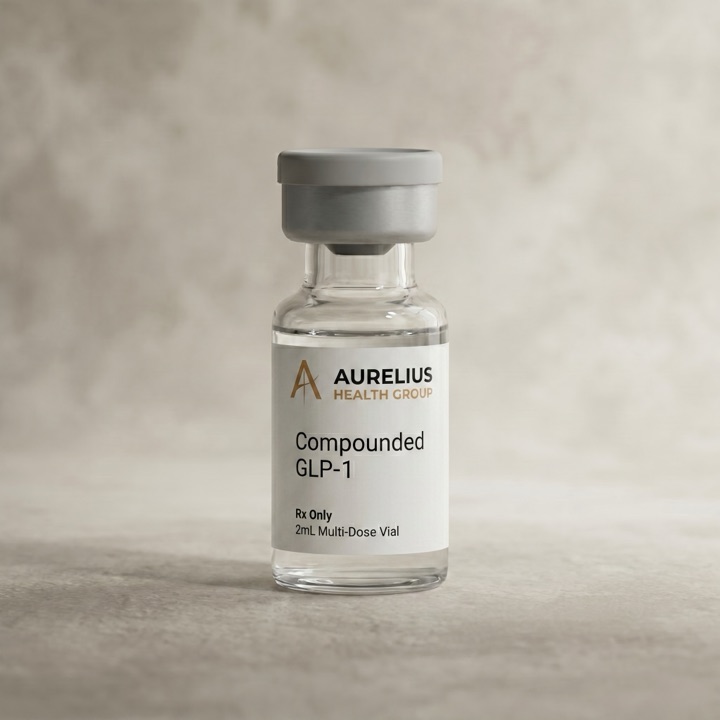
Microdosing tirzepatide works through the same mechanism as the standard dose: the drug activates the GIP and GLP-1 receptors, which slows stomach emptying and dampens appetite signals, and the size of those effects generally rises and falls with the amount given. What changes at a lower dose is how strongly those receptors are engaged, which the trial data suggest affects both the average benefit and the rate of digestive side effects.
The difficulty is that "microdosing" is a marketing and community term rather than a tested regimen. No randomized trial has studied a defined tirzepatide microdosing protocol, so most of what can be said comes from the lowest doses that were studied, from the drug's pharmacology, and from the FDA label for Zepbound, the branded weight management product.
Key Takeaways
- Tirzepatide microdosing is not a dosing category on the Zepbound label, which lists 2.5 mg weekly as a starting dose for 4 weeks and 5 mg, 10 mg or 15 mg weekly as maintenance doses; the label states that 2.5 mg is not approved as a maintenance dose.
- The lowest tirzepatide dose tested in a published randomized efficacy trial was 1 mg weekly, in a 26 week phase 2 study of 318 adults with type 2 diabetes, where HbA1c fell by an average of 1.06% at 1 mg compared with 1.94% at 15 mg and 0.06% on placebo.
- In the same phase 2 trial, gastrointestinal side effects were dose related, reported by 23.1% of participants at 1 mg, 66.0% at 15 mg and 9.8% on placebo.
- In SURMOUNT-1, the lowest dose in that trial, 5 mg, produced an average weight change of 15.0% at 72 weeks, compared with 20.9% at 15 mg and 3.1% on placebo; no dose below 5 mg was tested for maintenance.
- Inflammation markers such as hsCRP fell at every SURMOUNT-1 dose in a post hoc analysis, and a 2026 meta analysis found pancreatitis rare with no clear dose effect between 5 mg and 15 mg, but neither question has been studied at microdoses.
What does microdosing tirzepatide mean?
Microdosing tirzepatide usually means taking less than the labeled maintenance doses, either by staying at or below the 2.5 mg starting dose or by moving up in smaller steps than the label describes. The term has no regulatory or clinical definition, so two people who say they are microdosing may be taking very different amounts on very different schedules.
The Zepbound prescribing information sets out a specific ladder. Treatment starts at 2.5 mg once weekly for 4 weeks, then moves to 5 mg, and the dose may rise in 2.5 mg increments after at least 4 weeks on the current dose, with maintenance at 5 mg, 10 mg or 15 mg. The label also states that the 2.5 mg dosage is for treatment initiation and is not approved as a maintenance dosage, which means any plan that holds a person at or below that level sits outside the labeled use. Our overview of how microdosing differs from standard GLP-1 doses covers the general idea across the drug class.
Figure 1
The Labeled Zepbound Dose Ladder, Earliest Schedule to 15 mg
Source: Zepbound prescribing information, DailyMed (revised 8/2026). Each step requires at least 4 weeks on the current dose; many people stay at a lower maintenance dose.
How does microdosing tirzepatide work in the body?
A microdose of tirzepatide works on the same two receptors as a full dose, GIP and GLP-1, but with less drug available to bind them at any given time. Tirzepatide is a single molecule designed to activate both receptors, and that dual action slows how quickly the stomach empties, increases insulin release when blood sugar is high, and acts on appetite centers in the brain. Our explainer on how tirzepatide's dual GIP and GLP-1 action works goes through the mechanism step by step.
Tirzepatide stays in the body for a long time, which shapes how any dose behaves. A population pharmacokinetic model built by Lilly scientists from 19 pooled studies estimated a half life of about 5 days, long enough to sustain exposure with once weekly injections (Schneck and Urva, 2024), and the Zepbound label gives an elimination half life of approximately 5 to 6 days in people with overweight or obesity. Because of that long half life, a weekly dose builds up to a fairly steady level over several weeks, and a smaller dose simply settles at a lower steady level rather than working in a different way.
What does a low dose of tirzepatide actually do?
The clearest data on a true low dose come from a 2018 phase 2 trial that included a 1 mg arm. Frias and colleagues, writing in The Lancet, randomized 318 adults with type 2 diabetes to once weekly tirzepatide at 1 mg, 5 mg, 10 mg or 15 mg, to dulaglutide 1.5 mg, or to placebo for 26 weeks. The authors reported that the effect on HbA1c was dose dependent and did not plateau, with average reductions of 1.06% at 1 mg, 1.73% at 5 mg, 1.89% at 10 mg and 1.94% at 15 mg, against 0.06% on placebo.
Figure 2
Phase 2 Trial: Average HbA1c Reduction at 26 Weeks by Dose
Source: Frias JP et al., Lancet 2018. Adults with type 2 diabetes; change in HbA1c in percentage points. Group averages. Individual results vary.
Body weight followed a similar pattern. Average weight change across the four tirzepatide doses ranged from 0.9 kg to 11.3 kg, compared with 0.4 kg on placebo, and between 14% and 71% of participants on tirzepatide reached at least 5% weight loss depending on dose. The abstract reports these as ranges across doses rather than giving each arm's figure, so the 1 mg result can only be placed at the low end of that range.
Side effects also scaled with dose. Gastrointestinal events such as nausea, diarrhea and vomiting were reported by 23.1% of participants at 1 mg, 32.7% at 5 mg, 51.0% at 10 mg and 66.0% at 15 mg, compared with 9.8% on placebo, and most were mild to moderate and transient. Decreased appetite was reported by 3.8% at 1 mg and 20.0% at 5 mg, against 2.0% on placebo. This was a short study in people with diabetes rather than a weight management trial, and it did not test a microdosing protocol, so it shows how the drug behaves at low exposure rather than how a microdosing plan performs.
Figure 3
Phase 2 Trial: Share of Participants Reporting Gastrointestinal Events
Source: Frias JP et al., Lancet 2018. Nausea, diarrhea and vomiting were the most common events; most were mild to moderate and transient. Not a microdosing protocol.
How does the dose affect tirzepatide weight loss?
In people with obesity, higher tirzepatide doses produced more average weight loss, and the lowest dose in the SURMOUNT-1 trial was 5 mg. SURMOUNT-1 assigned 2539 adults with obesity, or overweight plus a weight related condition, and without diabetes to tirzepatide 5 mg, 10 mg or 15 mg or placebo for 72 weeks, including a 20 week dose escalation period. Average weight change at 72 weeks was 15.0% at 5 mg, 19.5% at 10 mg and 20.9% at 15 mg, compared with 3.1% on placebo.
Figure 4
SURMOUNT-1: Average Weight Change at 72 Weeks by Dose
Source: Jastreboff AM et al., SURMOUNT-1, N Engl J Med 2022. Adults with obesity or overweight, without diabetes. No dose below 5 mg was tested. Individual results vary.
The most common side effects were gastrointestinal, mostly mild to moderate, and occurred primarily during dose escalation. Adverse events led 4.3%, 7.1% and 6.2% of participants on 5 mg, 10 mg and 15 mg to stop treatment, compared with 2.6% on placebo. Because no arm in SURMOUNT-1 stayed below 5 mg, the trial cannot say how much weight a person would lose on a dose of 2.5 mg or less over the long term.
What is a microdosing tirzepatide dose and schedule?
There is no standard microdosing tirzepatide dose or schedule, because none has been tested and approved. The only schedule with regulatory backing is the label's ladder of 2.5 mg for at least 4 weeks followed by steps of 2.5 mg, each held for at least 4 weeks, toward a maintenance dose of 5 mg, 10 mg or 15 mg.
Some compounded protocols use smaller weekly amounts, slower steps, or a weekly amount divided into more than one injection. No trial has compared those patterns with the labeled schedule, and the roughly 5 day half life is the reason the approved product is given once weekly. Any change to dose or timing is a decision for the prescribing clinician, and our guide to what to do after a missed tirzepatide dose explains how timing rules work on the labeled schedule.
Is microdosing tirzepatide better than the regular dose?
No trial has shown that microdosing tirzepatide is better than the regular dose, because no trial has compared the two. The available data describe a trade off: in the phase 2 study, lower doses produced smaller average changes in blood sugar and weight and lower rates of gastrointestinal side effects, while SURMOUNT-1 showed less average weight loss at 5 mg than at 10 mg or 15 mg.
Whether a lower dose is the right choice depends on a person's goals, medical history and response, which is why a clinician sets the dose and reviews it over time. Our article on microdosing compared with the full dose looks at this question for semaglutide, and the same caution about missing head to head data applies to tirzepatide.
Can microdosing tirzepatide help with inflammation?
The evidence that tirzepatide lowers inflammation markers comes from standard doses, and there are no data on microdoses. In a post hoc analysis of SURMOUNT-1 published in 2026, Sattar and colleagues measured blood biomarkers in 392 participants and found that, relative to placebo at week 72, high sensitivity C-reactive protein (hsCRP) fell by 36.9% at 5 mg, 46.9% at 10 mg and 54.6% at 15 mg, while IL-6 fell by 25.4%, 27.8% and 30.2%.
Figure 5
SURMOUNT-1 Post Hoc Analysis: Change in Inflammation Markers vs Placebo at 72 Weeks
Source: Sattar N et al., J Am Coll Cardiol 2026. Post hoc analysis of 392 participants, funded by Eli Lilly; percent change in geometric means relative to placebo. Biomarker changes, not clinical outcomes. No microdose was studied.
The authors described these as associations with selected inflammation biomarkers, and the analysis was funded by Eli Lilly. Lower biomarker levels are not the same as a proven clinical benefit, and the changes rose with dose in a way that tracks the larger weight loss at higher doses. Whether a microdose produces any meaningful change in inflammation is not established in trials.
Can microdosing tirzepatide cause pancreatitis?
Pancreatitis is a listed warning for tirzepatide at any dose, and there is no evidence that a microdose removes that risk. The Zepbound label states that acute pancreatitis, including fatal and nonfatal hemorrhagic or necrotizing pancreatitis, has been observed in patients treated with GLP-1 receptor agonists or Zepbound.
A 2026 systematic review and meta analysis in Pancreatology by Benny and colleagues pooled 19 randomized trials with 15,471 participants and found acute pancreatitis in 0.22% of participants. The authors found no demonstrable dose response between 5 mg and 15 mg, for example a risk ratio of 0.70 for 15 mg compared with 5 mg, while noting that precision remains limited and all included trials were industry funded. Since risk did not clearly rise with dose in that range, there is no basis for assuming a smaller dose is protective, and severe abdominal pain that does not go away needs prompt medical care regardless of dose.
Why does the source of microdosed tirzepatide matter?
Microdosed tirzepatide is often supplied by compounding pharmacies, and compounded drugs are not FDA approved. The FDA states that the agency does not review compounded drugs for safety, effectiveness or quality before they are marketed, and it reports receiving more than 730 adverse event reports for compounded tirzepatide as of May 31, 2026, while noting that underreporting is likely and causation is not always clear.
The FDA has also received multiple reports of adverse events, some requiring hospitalization, linked to dosing errors with compounded GLP-1 injections, including errors when patients measured their own doses. Small doses drawn from a vial leave little margin for error, so clear dosing instructions and clinician oversight carry more weight with a microdosing plan, not less.
Frequently asked questions
The bottom line
Microdosing tirzepatide relies on the same receptors and the same long half life as the labeled doses, and the available data suggest that a smaller dose produces smaller average effects along with fewer digestive side effects. What remains untested is whether any specific microdosing plan delivers a better balance than the labeled schedule, so the dose is best treated as a clinical decision reviewed over time.
Sources
- Frias JP et al. Efficacy and safety of LY3298176, a novel dual GIP and GLP-1 receptor agonist, in patients with type 2 diabetes: a randomised, placebo controlled and active comparator controlled phase 2 trial. Lancet. 2018. doi.org/10.1016/S0140-6736(18)32260-8
- Jastreboff AM et al. Tirzepatide Once Weekly for the Treatment of Obesity. N Engl J Med. 2022. doi.org/10.1056/NEJMoa2206038
- Sattar N et al. Comprehensive Long Term Changes in Cardiovascular Risk Biomarkers With Tirzepatide: A SURMOUNT-1 Post Hoc Analysis. J Am Coll Cardiol. 2026. doi.org/10.1016/j.jacc.2026.04.044
- Benny O et al. Dose response analysis of tirzepatide and acute pancreatitis: an international systematic review and quantitative meta analysis of randomised trials. Pancreatology. 2026. doi.org/10.1016/j.pan.2026.03.021
- Schneck K, Urva S. Population pharmacokinetics of the GIP/GLP receptor agonist tirzepatide. CPT Pharmacometrics Syst Pharmacol. 2024. doi.org/10.1002/psp4.13099
- Zepbound prescribing information, DailyMed, revised 8/2026.
- U.S. Food and Drug Administration. FDA's Concerns with Unapproved GLP-1 Drugs Used for Weight Loss, content current as of 10/01/2026.
Take the next step
Talk with a licensed provider
A 2 minute intake connects you with a licensed provider who reviews your health history and discusses whether treatment is appropriate for you.
$89 first month, then $199/month. Cancel anytime.
Start Your Journey Prescription only if clinically appropriate.