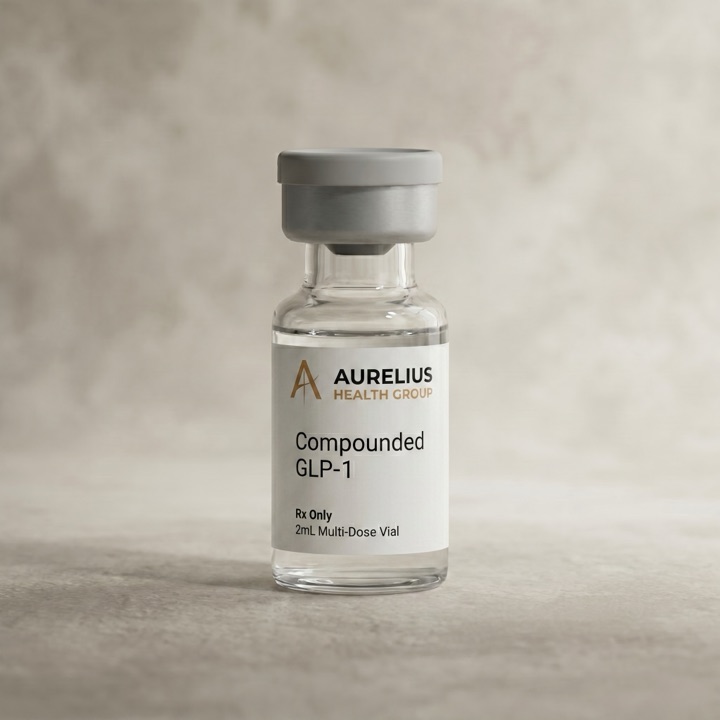
GLP-1 medicine for PCOS is rarely covered by insurance on the strength of the PCOS diagnosis alone, because no GLP-1 drug is FDA approved for polycystic ovary syndrome. When a plan does pay, it is usually because the person also meets the criteria for a labeled use, most often chronic weight management, type 2 diabetes or, for Zepbound, obstructive sleep apnea, and because that particular plan chose to cover the drug at all.
That distinction matters for the 10% to 13% of women who have PCOS, according to the 2023 international PCOS guideline. A clinician may see a GLP-1 medicine as a reasonable option, yet the insurer reads the claim through the drug label and its own formulary rules, which this article walks through payer by payer.
Key Takeaways
- No GLP-1 medicine is FDA approved for PCOS; the Zepbound label covers weight reduction and obstructive sleep apnea, and the Wegovy label covers weight reduction, cardiovascular risk reduction and, for the injection, MASH.
- In 2025, 19% of large employers offering health benefits covered GLP-1 drugs for weight loss, rising to 43% among firms with 5,000 or more workers, according to the KFF Employer Health Benefits Survey.
- Medicare is statutorily barred from covering drugs used for weight loss, although a temporary Medicare GLP-1 Bridge that began July 1, 2026 covers Wegovy and Zepbound for eligible Part D enrollees for a $50 copayment.
- The 2023 international PCOS guideline says anti-obesity medications, including semaglutide and tirzepatide, could be considered alongside lifestyle care for higher weight in adults with PCOS; this supports documentation but does not create coverage.
Is GLP-1 for PCOS covered by insurance?
Insurers build their coverage criteria around the FDA labeled indications of each drug, and PCOS is not among them for any GLP-1 medicine on the US market.
The Zepbound (tirzepatide) prescribing information lists two uses, each in combination with diet and physical activity: reducing excess body weight in adults with obesity, or with overweight and at least one weight related comorbid condition, and treating moderate to severe obstructive sleep apnea in adults with obesity. The Wegovy (semaglutide) label lists weight reduction in adults and in children 12 and older with obesity, reduction of major cardiovascular events in adults with established cardiovascular disease and obesity or overweight, and, for the injection, noncirrhotic MASH with F2 to F3 liver fibrosis. Neither label mentions polycystic ovary syndrome.
A prior authorization request that names only PCOS is therefore commonly treated as off label and declined.
Why doesn't a PCOS diagnosis unlock GLP-1 coverage?
A PCOS diagnosis does not unlock coverage because plans pay for labeled indications rather than for conditions that are merely associated with them. PCOS is closely linked with insulin resistance and higher weight, but the claim is still judged against the label and the plan's written criteria.
Figure 1 · Illustration
How a GLP-1 Prior Authorization Request Is Usually Reviewed
Illustration based on the labeled indications in the Zepbound and Wegovy prescribing information (DailyMed). No data are plotted.
What do insurers look at instead of PCOS?
Insurers typically look at the labeled indication and the measurements that support it. For weight management, the trials behind the Zepbound label enrolled adults with a BMI of 30 or more, or 27 to under 30 with a weight related condition, and many plans mirror thresholds like these in their prior authorization criteria.
KFF found that about a third of large firms covering GLP-1 drugs for weight loss attach conditions such as meeting with a dietitian or joining a lifestyle program before coverage begins.
When a person with PCOS also has type 2 diabetes, coverage is usually reviewed under the diabetes benefit, while insulin resistance on its own is not a labeled indication.
Is Zepbound covered by insurance for PCOS?
Zepbound is not covered for PCOS as such, but it may be covered for a person with PCOS who meets its weight management or sleep apnea indication, provided the plan includes it. In the 2025 KFF Employer Health Benefits Survey, 19% of large firms offering health benefits covered GLP-1 drugs for weight loss, and among firms with 5,000 or more workers the share was 43%, up from 28% in 2024.
Figure 2
Large Employers Covering GLP-1 Drugs for Weight Loss
Source: KFF 2025 Employer Health Benefits Survey, news release, October 2025.
The obstructive sleep apnea indication is a separate route. The 2023 guideline highlights sleep apnea among the broader features of PCOS, and a person with a sleep study confirming moderate to severe obstructive sleep apnea and obesity may qualify under that indication even on a plan that excludes weight loss drugs.
Does Medicare or Medicaid cover GLP-1 for PCOS?
Medicare and Medicaid have no PCOS route, and their weight management coverage is limited. KFF notes that Medicare is statutorily prohibited from covering drugs used for weight loss. To fill that gap, a temporary Medicare GLP-1 Bridge began on July 1, 2026, covering Wegovy and Zepbound for eligible Part D enrollees for a $50 copayment, with eligibility based on a BMI of 35 or more alone, or 27 or more plus other clinical criteria.
Medicaid coverage for obesity treatment is optional for states. KFF counted 13 state Medicaid programs covering GLP-1 drugs for obesity treatment under fee for service as of January 2026, while coverage for diabetes, cardiovascular disease and sleep apnea indications is required.
| Payer | GLP-1 for weight management | Other labeled indications | Where PCOS fits |
|---|---|---|---|
| Employer plans | Plan by plan 19% of large firms in 2025; 43% of firms with 5,000+ workers | Diabetes handled separately | Labeled indication only |
| Medicare | Temporary Statutory bar on weight loss drugs; GLP-1 Bridge since July 1, 2026, $50 copay, BMI 35+ or 27+ with criteria | Covered for medically accepted non weight uses | No PCOS route |
| Medicaid | Optional 13 states covered obesity treatment as of January 2026 | Required Diabetes, cardiovascular disease, sleep apnea | May qualify through a required indication |
Sources: KFF employer survey 2025; KFF on the Medicare GLP-1 Bridge; KFF on Medicaid GLP-1 coverage.
What does the research show about GLP-1 medicines in PCOS?
GLP-1 medicines produce weight loss in women with PCOS and overweight or obesity, while evidence on PCOS specific outcomes is limited. A 2026 systematic review and meta-analysis by Forslund and colleagues in the European Journal of Endocrinology included 11 randomized trials and found that GLP-1 receptor agonists added to other care reduced BMI by 1.38 kg/m² compared with control, rated low certainty. Evidence was insufficient to draw conclusions on glucose, insulin, hirsutism and menstrual regularity, and no study assessed cost effectiveness.
A 2026 retrospective UK cohort by Clift and colleagues followed 54,114 women prescribed tirzepatide, of whom 4,241 (7.84%) reported PCOS. At 10 months, mean weight change was -19.40% in women with PCOS who reached that point (n=40), compared with -18.74% in women without PCOS (n=397), a difference that was not statistically significant.
Figure 3
Mean Weight Change at 10 Months on Tirzepatide, With and Without Self Reported PCOS
Source: Clift AK et al., Journal of the Endocrine Society, 2026. Retrospective UK cohort; women reaching the 10 month follow up.
Figure 4
Share of Women Prescribed Tirzepatide Who Reported PCOS in the Clift Cohort
Source: Clift AK et al., Journal of the Endocrine Society, 2026.
A small randomized trial by Yang and colleagues (2026) assigned 60 women with PCOS and overweight or obesity to metformin 1000 mg twice daily alone or with tirzepatide 5 mg weekly for 16 weeks. Weight fell by 10.4 kg with the combination versus 1.7 kg with metformin alone, and menstrual cycle recovery was more frequent with the combination, although the trial was open label and short.
Figure 5
Mean Weight Change After 16 Weeks: Metformin Alone vs Metformin Plus Tirzepatide 5 mg
Source: Yang Z et al., Diabetes, Obesity and Metabolism, 2026.
For coverage, this evidence supports the clinical rationale a prescriber documents, but without cost effectiveness data in PCOS, payers have little reason to create PCOS specific criteria. A fuller look at the clinical side is in our article on tirzepatide, insulin resistance and androgens in PCOS.
How can someone with PCOS improve the odds of GLP-1 coverage?
The most useful step is to read the plan's formulary and prior authorization criteria for Zepbound or Wegovy before a prescription is written.
- Confirm the benefit. Ask whether weight management GLP-1 drugs are covered, or only diabetes drugs.
- Document the labeled indication. A dated weight and BMI plus weight related conditions such as high blood pressure or sleep apnea usually matter more in review than the PCOS diagnosis.
- Record prior lifestyle care. Many plans ask for evidence of diet, activity or counseling before approval.
- Cite the guideline in an appeal. A clinician can reference recommendation 4.5.1 of the 2023 international PCOS guideline in a letter of medical necessity.
- Plan for contraception. The same guideline advises effective contraception when pregnancy is possible for women taking GLP-1 receptor agonists, because pregnancy safety data are lacking; our article on tirzepatide, contraception and fertility covers the details.
What are the options if insurance denies GLP-1 coverage for PCOS?
A denial is not always final, since most plans offer an internal appeal followed by an external review.
When coverage is unavailable, people with PCOS sometimes discuss self pay programs, metformin or another labeled route with their clinician. The 2023 guideline notes the potential need for long term use and the high risk of weight regain after stopping, which affects total cost.
Frequently asked questions
The bottom line
Insurance coverage of GLP-1 medicine for PCOS is decided almost entirely by whether the person meets a labeled indication such as obesity, type 2 diabetes or sleep apnea, and by whether the plan covers that drug. The PCOS diagnosis and the growing tirzepatide evidence strengthen the clinical case, but they do not create coverage on their own.
Sources
- Zepbound (tirzepatide) prescribing information, DailyMed, revised 8/2026.
- Wegovy (semaglutide) prescribing information, DailyMed, revised 6/2026.
- Teede HJ et al. 2023 International PCOS Guideline recommendations. J Clin Endocrinol Metab. 2023.
- Forslund M et al. GLP-1 receptor agonists in PCOS: meta-analysis. Eur J Endocrinol. 2026.
- Clift AK et al. Tirzepatide weight loss with and without PCOS. J Endocr Soc. 2026.
- Yang Z et al. Tirzepatide plus metformin in PCOS: randomized trial. Diabetes Obes Metab. 2026.
- KFF. Medicare's temporary GLP-1 program. March 2026.
- KFF. 2025 Employer Health Benefits Survey news release. October 2025.
- KFF. Medicaid Coverage of and Spending on GLP-1s. January 2026.
Take the next step
Talk with a licensed provider
A 2 minute intake connects you with a licensed provider who reviews your health history and discusses whether treatment is appropriate for you.
$89 first month, then $199/month. Cancel anytime.
Start Your Journey Prescription only if clinically appropriate.