Restaurants are built around an appetite that tirzepatide deliberately reduces. A single restaurant meal in the United States averages roughly 1,200 calories before drinks or dessert, and it arrives on a plate sized for someone whose stomach empties on an ordinary schedule. Tirzepatide slows gastric emptying and reduces appetite signaling through receptors in the hypothalamus and the hindbrain, so a plate that once felt unremarkable can now feel like an obligation, and if the meal is rich in fat or eaten quickly it can become an uncomfortable one several hours later.
This article covers the practical side of that mismatch, including how to order, when in the weekly cycle a large meal is easiest to tolerate, which dishes most often cause trouble, and how family gatherings tend to go. It is educational guidance about daily logistics rather than medical advice, since tirzepatide is a prescription medication and questions about dosing, side effects or nutrition in a specific case belong with a licensed clinician.
Key Takeaways
- Tirzepatide delays gastric emptying, so a restaurant meal eaten at a normal pace can arrive faster than the stomach processes it, and the resulting fullness, reflux or nausea often peaks one to three hours after the meal rather than during it.
- Meals high in fat are the trigger people report most consistently, because dietary fat independently slows gastric emptying and therefore compounds an effect the medication is already producing.
- Gastrointestinal effects are the most frequently reported adverse events in the tirzepatide trials, were mostly mild to moderate in SURMOUNT-1, and occurred predominantly during dose escalation rather than at a stable dose.
- Tirzepatide reaches peak plasma concentration roughly 8 to 72 hours after an injection, so scheduling a celebratory meal for the later days of the weekly interval is generally more comfortable than placing it immediately after a dose.
- Ordering an appetizer with a vegetable side, or sharing an entree, matches restaurant portions to a reduced appetite more effectively than ordering a full entree and leaving most of it untouched.
- Eating the protein portion first matters because fullness commonly arrives near the halfway point of a restaurant plate, and adequate protein combined with resistance training is associated with better preservation of lean mass during weight loss.
Why does eating out feel different on tirzepatide?
Eating out feels different because tirzepatide changes both how much food a person wants and how quickly that food leaves the stomach. The appetite effect is central, since GLP-1 receptors in the arcuate nucleus of the hypothalamus and the area postrema of the hindbrain register the drug as a persistent signal that a meal has already arrived, which lowers the drive to continue eating. The gastric effect is mechanical, because the stomach empties more slowly, particularly during the first months of therapy and in the period following each dose increase.
Restaurants are designed against both of those changes. Portions are large, the pace of the meal is set by service rather than by appetite, and the conventional sequence of bread, drinks, appetizer, entree and dessert places volume in the stomach before the protein ever appears. On tirzepatide the fullness signal that would once have arrived midway through the entree may instead arrive shortly after the bread basket, which leaves the protein untouched and the meal nutritionally lopsided.
Figure 1
Why Restaurant Portions and a Reduced Appetite Collide: Measured Meal Energy Against Measured Intake Reduction
Sources: Urban et al., JAMA Internal Medicine 2016 (energy content of frequently ordered restaurant meals); Urban et al., Journal of the Academy of Nutrition and Dietetics 2013 (independent and small chain restaurants); reported mean reduction in daily energy intake with tirzepatide from published mechanism of action research. Individual results vary.
The delayed timing is what surprises people most. Discomfort frequently peaks one to three hours after leaving the restaurant rather than at the table, which makes it easy to attribute the symptoms to something other than the portion size or the fat content of what was ordered.
Figure 2
Why Discomfort Arrives After the Meal: Modeled Stomach Fullness Following a Large Meal With Normal Versus Delayed Gastric Emptying
Sources: Illustrative model based on the delayed gastric emptying described in the tirzepatide prescribing information, which notes that the delay is greatest after the first dose and diminishes over time. Not patient data.
Which restaurant foods most often cause nausea on tirzepatide?
Fried food, cream and butter sauces, and large desserts are the triggers reported most consistently, because dietary fat independently slows gastric emptying and therefore compounds what the medication is already doing. Very large portions of any composition are the second common trigger, and carbonated drinks alongside alcohol complete the list.
Dishes that come up repeatedly include deep fried appetizers, cream sauce pasta, pizza with heavy cheese, barbecue combining fatty cuts with sugary sauce, buffet service where grazing conceals the total volume, and rich desserts eaten on top of a full meal. Spicy food is more individual, since some people tolerate it without difficulty while those who also experience reflux on tirzepatide often find that capsaicin makes it worse.
Gastrointestinal effects are the most frequently reported adverse events for tirzepatide in clinical trials, were predominantly mild to moderate in SURMOUNT-1, and were most pronounced during dose escalation. That pattern matters for social planning, because a wedding two days after a first 10 mg dose is a harder assignment than the same wedding six weeks into a stable dose. Nausea that is severe or persistent, or abdominal pain that is intense and radiates toward the back, is a reason to contact a clinician promptly rather than a matter of menu strategy.
Figure 3
Most Common Gastrointestinal Adverse Events Over 72 Weeks in SURMOUNT-1: Tirzepatide Versus Placebo
Sources: Jastreboff et al., SURMOUNT-1, New England Journal of Medicine 2022 (2,539 participants, 72 weeks). Rates shown are approximate and pooled across tirzepatide doses. Individual experience varies.
| Element of the meal | Commonly better tolerated | Commonly problematic |
|---|---|---|
| Protein preparation | Grilled, roasted, baked, steamed | Deep fried, breaded, confit |
| Sauce | Tomato, citrus, herb, served on the side | Cream, butter, cheese based |
| Starter | Clear soup, seafood, salad | Bread basket before the entree |
| Portion strategy | Appetizer as the main, or a shared entree | Full entree eaten at conversational pace |
| Beverage | Still water, unsweetened tea | Carbonated drinks, alcohol on an empty stomach |
| Dessert | A few bites shared, or taken home | A full rich dessert after a full meal |
General tolerance patterns reported by people taking incretin medications, aligned with the slowing effect of dietary fat on gastric emptying. Individual tolerance varies, and this table is not a prescribed diet.
What should a person order at a restaurant on tirzepatide?
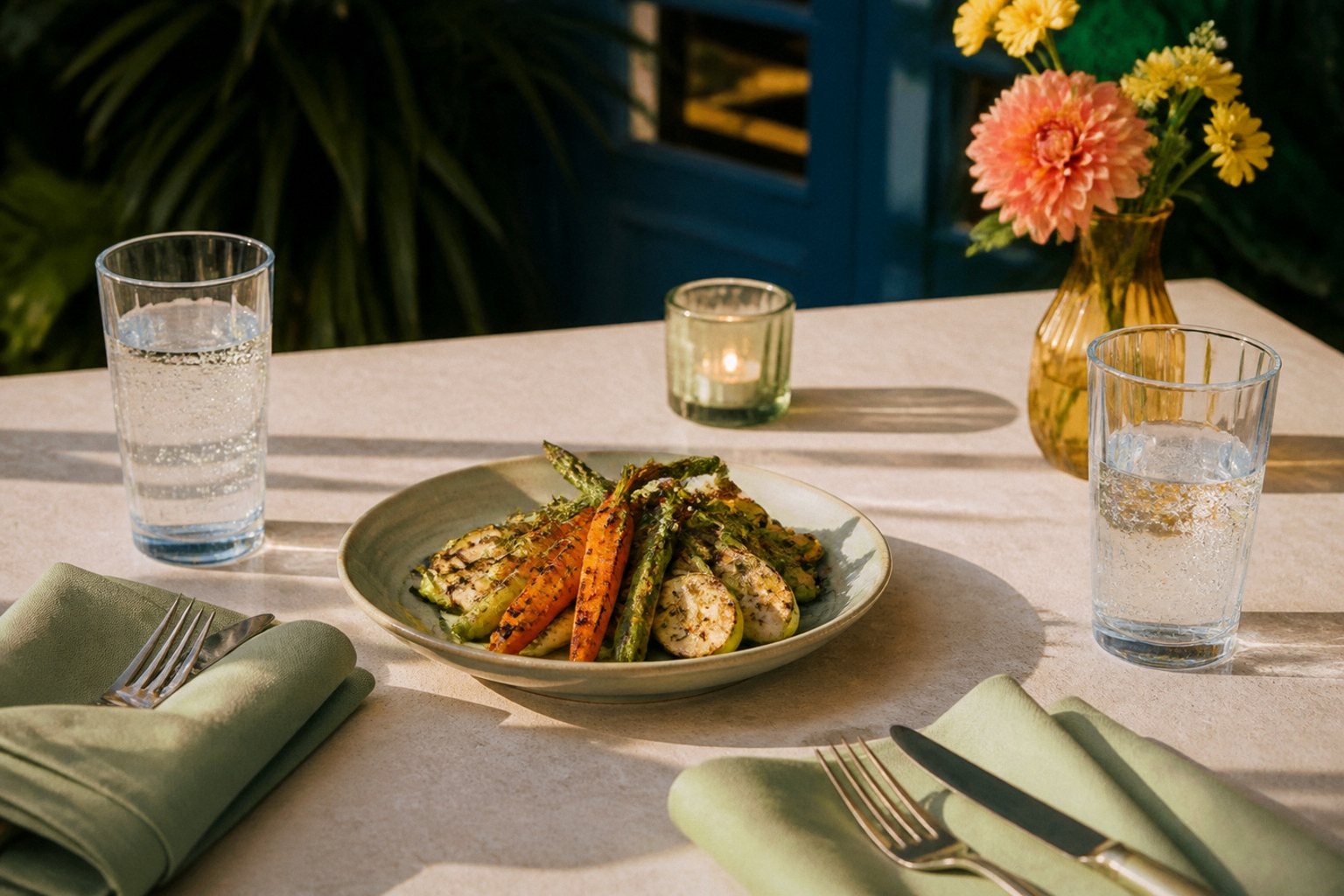
The practical answer is to order for the appetite that exists now rather than for the appetite the menu assumes, which in most cases means building the meal around a protein source, choosing preparations that are grilled, roasted, baked or steamed, and managing volume before the plate arrives rather than afterward.
Appetizer as the entree. Shrimp cocktail, grilled skewers, a small steak appetizer, or a cup of clear soup with a vegetable side is frequently the right size, and it removes the friction of facing a plate that cannot be finished.
Divide the entree before starting. Sharing one entree between two people, or asking for a container at the beginning and setting half aside immediately, converts a 1,200 calorie plate into two reasonable meals.
Eat the protein first. If fullness arrives at roughly half of the meal, which is common, then the half already eaten is the half that matters most for preserving lean mass during weight loss.
Ask for sauces and dressings on the side. This is less about counting calories than about reducing the fat load, and it is the easiest change to make without altering what was ordered.
Breakfast deserves a specific note, because eggs, smoked salmon, yogurt and cottage cheese are unusually well tolerated on this medication, while pancakes, pastries and heavy breakfast meats sit at the intersection of high fat and refined carbohydrate that tends to cause the most difficulty.
Figure 4
What Actually Gets Eaten When Fullness Arrives Near the Halfway Point of a Restaurant Plate
Sources: Schematic constructed to illustrate eating order. Protein intake combined with resistance training is associated with better preservation of lean mass during weight loss. Individual results vary.
When in the weekly cycle is a large meal easiest to tolerate?
The later days of the interval are usually easier. Tirzepatide has an elimination half life of roughly 5 days and reaches peak plasma concentration somewhere between 8 and 72 hours after injection, so appetite suppression and gastrointestinal effects tend to be strongest in the first two or three days after a dose and to soften toward the end of the week.
For someone who injects on Sunday, a Friday or Saturday dinner typically lands in the more comfortable part of the cycle, while a Monday or Tuesday celebration lands in the least comfortable part. Some people find it useful to choose the weekly injection day around a recurring social pattern, so that a standing Saturday family dinner falls on day six rather than day two. Changing an injection day carries its own rules about the minimum interval between doses, so the adjustment belongs in a conversation with the prescribing clinician rather than being improvised.
Figure 5
The Weekly Rhythm: Modeled Plasma Concentration Across One Dosing Interval and the More Comfortable Window for a Large Meal
Sources: Modeled from the approximately 5 day elimination half life and the 8 to 72 hour time to peak reported in the tirzepatide prescribing information. Illustrative rather than patient data, and no dosing schedule should be changed without clinician input.
How should holidays and family meals be approached?
A holiday is best treated as an ordinary meal with more social pressure attached, which means planning for the pressure rather than for the food. Three factors usually determine how the day goes: how much protein was eaten earlier, how quickly the main meal is consumed, and whether alcohol arrives on an empty stomach.
Eat a protein forward breakfast. Arriving at a three o'clock holiday dinner having eaten nothing all day invites both discomfort and a lopsided meal, because whatever appetite remains gets spent on whichever dish is nearest.
Take small portions of several dishes. A spoonful each of five dishes reads as full participation to everyone at the table while fitting a reduced appetite far better than a complete portion of two dishes.
Slow the pace deliberately. A slower pace gives fullness signals time to arrive before the volume does, and placing the fork down between bites is a crude method that works.
Stop at comfortable rather than at full. On tirzepatide the distance between comfortable and excessive is much smaller than it used to be, and the consequence of crossing it appears hours later.
Alcohol deserves separate attention, since many people report that their tolerance falls on incretin medications, and drinking on a nearly empty and slowly emptying stomach can intensify both the immediate effect and the next day gastrointestinal symptoms. Anyone who plans to drink is generally better served by eating protein first and alternating with water.
What can be said when others comment on a small plate?
Something short and warm usually ends the conversation. The most common social friction on this medication is not the food itself but a host who reads a small plate as a verdict on their cooking, or a relative who wants a diagnosis served alongside dessert.
Lines that tend to close the subject without inviting follow up include noting that the food is delicious and that the pace is deliberate, mentioning a large lunch, or saying that the rest is going home because it will be better the next day. Complimenting a specific dish while taking a small portion resolves most host anxiety immediately, because the concern is almost always about the cooking rather than about the guest. Whether to disclose a prescription medication is entirely a personal decision, and many people find that telling one ally at a recurring family event removes most of the friction at future gatherings without making it a topic for the whole table.
The bottom line
Eating out on tirzepatide is mostly a scheduling and ordering problem rather than a question of willpower. Restaurant portions and menu sequencing assume an appetite that the medication has intentionally reduced, and dietary fat compounds the delayed gastric emptying that the drug already produces. Choosing grilled or roasted protein, managing portion size before the plate arrives, placing the significant meal in the later part of the weekly cycle, and keeping one short sentence ready for a curious host resolves most of the difficulty.
Restaurant meals that are consistently followed by severe nausea, repeated vomiting or significant abdominal pain warrant a conversation with a clinician rather than another menu adjustment, because they may indicate that the dose, the escalation pace or another element of treatment needs review.
Take the next step
Talk with a licensed provider
A 2 minute intake connects you with a licensed provider who reviews your health history and discusses whether treatment is appropriate for you.
$89 first month, then $199/month. Cancel anytime.
Start Your Journey Prescription only if clinically appropriate.