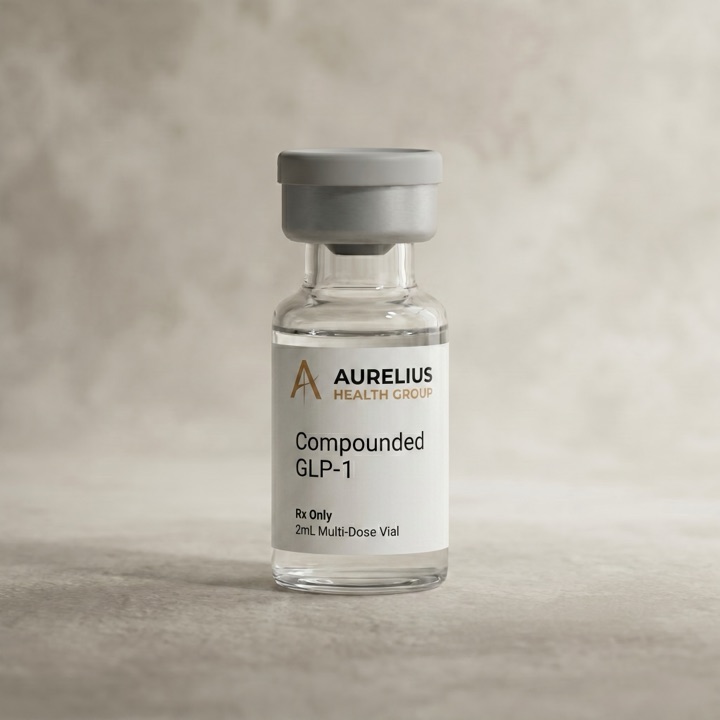
The reframing of chronic disease as fundamentally inflammatory is one of the more important shifts in modern medicine, because cardiovascular disease, type 2 diabetes, neurodegenerative diseases, many cancers, and the aging process itself are increasingly understood as conditions driven by chronic low grade inflammation that gradually damages tissue over decades. The CANTOS trial, which tested an anti-IL-1beta antibody for cardiovascular prevention, provided some of the strongest evidence that targeting inflammation directly reduces clinical events independent of lipid or blood pressure effects.
Published research suggests tirzepatide reduces inflammation markers substantially, because C-reactive protein falls roughly 20 to 40 percent over 12 to 18 months, IL-6 follows a similar pattern, and other inflammatory markers tracked in subset analyses show comparable improvements. The mechanism appears to be partly weight mediated, since visceral fat is a primary source of inflammatory cytokines, and partly direct, because GLP-1 receptor activation has anti-inflammatory effects on macrophages, vascular endothelium, and other immune active tissues.
The clinical implication is that the inflammation reduction appears to underlie and amplify many of the other benefits of the medication, which is why the inflammation story deserves more attention than it currently receives in the patient conversation. Here are 10 reasons the inflammation signal is one of the more important and underdiscussed aspects of the medication, written for education rather than as a treatment recommendation.
Figures drawn from published trial ranges over 12 to 18 months and from population registry summaries. Values are rounded and illustrative. Individual results vary.
At a glance
Published research suggests CRP falls roughly 20 to 40 percent on tirzepatide over 12 to 18 months, with IL-6 and other inflammatory markers following a similar pattern. The mechanism appears to combine weight loss, visceral fat reduction, improved insulin sensitivity, and direct anti-inflammatory effects of GLP-1 and GIP receptor activation on immune cells. The downstream effects appear to touch cardiovascular disease, neurodegeneration, joint health, and the broader aging trajectory, which is why the inflammation reduction is best understood as a lever that influences several disease pathways at once rather than a standalone finding.
1. Chronic inflammation is the substrate of most chronic disease
The model of chronic disease as inflammatory has accumulated substantial evidence over the past two decades, because atherosclerosis is driven by inflammatory cells in the arterial wall, type 2 diabetes involves chronic inflammation of pancreatic islets and adipose tissue, and Alzheimer's disease carries a substantial neuroinflammatory component. Osteoarthritis, NAFLD, COPD, and many other conditions share the common feature of chronic low grade inflammation that drives tissue damage over decades.
The implication is that interventions which reduce chronic inflammation may produce benefits across several disease categories at once rather than addressing each disease in isolation. Tirzepatide appears to be one such intervention, and the magnitude of the inflammation reduction it produces is large enough that the effect is worth examining on its own terms rather than as an incidental byproduct of weight loss.
Figure 1
Estimated Contributors to Elevated Systemic Inflammation in Metabolic Disease
Source: Approximate shares derived from adipose biology and metabolic inflammation literature. Values are rounded and illustrative. Individual results vary.
2. CRP reduction tracks with the other cardiometabolic improvements
C-reactive protein, the most clinically used inflammation marker, falls roughly 20 to 40 percent on tirzepatide over 12 to 18 months, and the magnitude tends to track with the visceral fat reduction, the glycemic improvement, and the weight loss. Patients who see the largest cardiometabolic improvements typically also see the largest CRP reductions, which is consistent with a shared underlying mechanism rather than an isolated effect on one pathway.
For patients who start with elevated CRP above 3 mg/L, the threshold commonly used to flag elevated cardiovascular risk, the medication often brings them into the lower risk range, and for patients with substantially elevated CRP above 10 mg/L the reduction is often larger in absolute terms. The CRP normalization is one of the more clinically actionable inflammation findings of the protocol, because it gives both the patient and the clinician a measurable marker of treatment response beyond weight and glucose.
Figure 2
Estimated C-Reactive Protein (CRP) Reduction by Intervention
Source: Estimated midpoint values derived from published trial ranges across interventions. Bars are approximate and not from a single head to head trial. Individual results vary.
3. IL-6 and other cytokines follow the same pattern
Beyond CRP, other inflammatory markers tracked in subset analyses such as IL-6, TNF-alpha, and IL-1beta show parallel reductions on tirzepatide, a pattern that is consistent with a broad reduction in inflammatory signaling rather than a specific effect on a single pathway. The breadth of the effect is one of the reasons the inflammation reduction appears clinically meaningful rather than a marker level curiosity.
IL-6 is particularly relevant because it drives CRP production, regulates immune function, and contributes to cancer cachexia and aging related muscle loss, so lower IL-6 levels are associated with reduced cardiovascular risk and slower aging trajectories in observational studies. The tirzepatide effect on IL-6 is one of the lesser discussed but mechanistically meaningful findings of the medication, and it helps explain why the downstream benefits extend well beyond the glycemic and weight effects.
Figure 3
Estimated CRP as Percent of Baseline Over 18 Months
Source: Estimated population means derived from published CRP trial ranges. A lower value reflects a larger reduction. Individual results vary.
4. The mechanism: visceral fat reduction is the primary driver
A substantial fraction of the inflammation reduction on tirzepatide appears to reflect visceral fat loss, because visceral adipose tissue is the body's largest source of inflammatory cytokines and secretes IL-6, TNF-alpha, and other mediators continuously, so reducing that depot lowers the source production directly. The roughly 30 to 40 percent visceral fat reduction the medication produces therefore translates into a proportionate reduction in cytokine secretion, which in turn lowers the systemic inflammation markers measured in the blood.
The pattern is consistent across multiple studies of weight loss interventions, though the magnitude on tirzepatide tends to be larger because the visceral fat reduction is larger. The inflammation story is not separate from the visceral fat story, and understanding the two together explains why the marker level changes are as large as they are.
The inflammation story and the visceral fat story are largely the same story, because reducing the visceral fat reduces the cytokine production, which lowers systemic inflammation and, over time, the downstream chronic disease risk that chronic inflammation drives.
5. Direct anti-inflammatory effects compound the weight mediated benefit
Beyond the weight mediated effect, GLP-1 receptor activation appears to have direct anti-inflammatory effects on macrophages, vascular endothelial cells, and other immune active tissues, and this direct contribution adds to the weight mediated reduction. The combination helps explain why the inflammation reduction on tirzepatide tends to be larger than what weight loss interventions of similar magnitude usually produce.
The mechanism appears to involve modulation of NF-kB signaling, reduced expression of inflammatory genes, and a shift in macrophage polarization toward less inflammatory states. The molecular detail is still being characterized, yet the functional implication is reasonably clear, because the medication appears to produce more anti-inflammatory effect per pound of weight lost than non pharmacological weight loss approaches achieve.
6. The cardiovascular implications parallel the CANTOS hypothesis
The CANTOS trial showed that targeting inflammation directly with an anti-IL-1beta antibody reduced cardiovascular events independent of lipid or blood pressure effects, which supported the idea that chronic inflammation is a primary and modifiable driver of atherosclerotic cardiovascular disease. Tirzepatide produces a different kind of anti-inflammatory effect through a different mechanism, yet the implications run in a similar direction.
The cardiovascular benefit of the medication likely reflects not only the lipid, blood pressure, and weight changes but also the direct inflammation reduction acting alongside them. The composite cardiovascular benefit is best understood as the sum of several mechanisms, and the inflammation contribution appears to be a meaningful part of that total rather than an afterthought.
Figure 4
Estimated High-Sensitivity CRP (mg/L) Over 12 Months
Source: Illustrative trajectories based on published high sensitivity CRP ranges. Curves are estimated and not from a single trial. Individual results vary.
7. The implications for cancer risk are complex
The relationship between inflammation, obesity, and cancer risk is well established, because obesity is associated with elevated risk of at least 13 cancers, including esophageal, gastric cardia, colorectal, liver, gallbladder, pancreatic, postmenopausal breast, endometrial, ovarian, kidney, multiple myeloma, meningioma, and thyroid, and chronic inflammation is one of the primary mechanistic links between them.
The implication for tirzepatide is that the inflammation reduction may translate into reduced cancer risk over the long run, though the magnitude and the time course require dedicated study before any such claim could be made with confidence. This is an active area of research, with results expected over the coming years from real world data and cohort studies, so the mechanism is plausible while the formal evidence is still developing and should not be presented as established.
8. The implications for neurodegenerative disease are emerging
Neuroinflammation contributes to the pathogenesis of Alzheimer's disease, Parkinson's disease, and other neurodegenerative conditions, and GLP-1 receptor agonists have shown early signals of cognitive benefit and possible neuroprotection, with the inflammation reduction proposed as one of the mechanisms. The evidence in this area is still maturing, so the findings are best treated as a research direction rather than a clinical recommendation.
For tirzepatide specifically, the dedicated neurodegeneration outcome data is still developing, and the mechanism is plausible based on the inflammation reduction and the central GLP-1 receptor effects. The clinical decision to use tirzepatide for cognitive protection in patients at risk of neurodegenerative disease is not yet supported by trial level evidence and remains an open question rather than a settled one.
9. The implications for inflammaging
Aging itself involves a gradual accumulation of chronic low grade inflammation that researchers have termed inflammaging, and that process contributes to age related muscle loss, frailty, cognitive decline, and the broader functional decline seen in older adults. Interventions that reduce inflammaging are increasingly recognized as relevant to healthy aging, which places the tirzepatide inflammation data in a wider context than diabetes and weight management alone.
Tirzepatide reduces inflammation in the same direction that healthy aging would require, and the magnitude of the effect is meaningful, though whether this translates into a clinically significant impact on aging trajectories is still being studied. The directional benefit is consistent with the broader hypothesis about reducing inflammaging, while the long term outcome data needed to confirm it is not yet in hand.
10. The composite anti-inflammatory effect is the underrated story
The central insight from the inflammation data on tirzepatide is that the anti-inflammatory effect appears to underlie and amplify most of the other benefits of the medication, because the cardiovascular, metabolic, kidney, liver, and possibly cognitive and longevity benefits all reflect in part the same underlying inflammation reduction. Viewed this way, inflammation is the connective thread rather than one item on a list.
Patients and clinicians who think of tirzepatide primarily as a weight loss or diabetes medication often miss the broader anti-inflammatory dimension, yet the inflammation reduction is the lever that touches several chronic disease pathways at once. That breadth deserves explicit recognition in the clinical conversation about why the medication produces such wide ranging metabolic benefits, even as the more speculative downstream claims remain under study.
What this means clinically
For patients on tirzepatide, baseline and follow up inflammation markers, with CRP at a minimum, are reasonable to include in routine monitoring, because the inflammation reduction is one of the underrated but mechanistically important effects of the protocol and tracking it provides additional evidence of treatment response beyond weight and glycemic markers alone.
For patients with conditions where chronic inflammation is a primary driver, such as cardiovascular disease, NAFLD, or joint disease, the inflammation reduction on tirzepatide may produce broader benefits than the standard weight or glycemic framing suggests, so the clinical decision is best made with the broader inflammation context in view. As with every aspect of the medication, that decision belongs with a qualified clinician who knows the full picture rather than with a generic protocol.
Figure 5
Estimated Reduction in Inflammatory Markers (Comparator vs Tirzepatide)
Source: Illustrative estimates based on published marker reduction ranges across interventions. Figures are approximate and not from a single trial. Individual results vary.
Frequently Asked Questions
Take the next step
Talk with a licensed provider
A 2 minute intake connects you with a licensed provider who reviews your health history and discusses whether treatment is appropriate for you.
$89 first month, then $199/month. Cancel anytime.
Start Your Journey Prescription only if clinically appropriate.