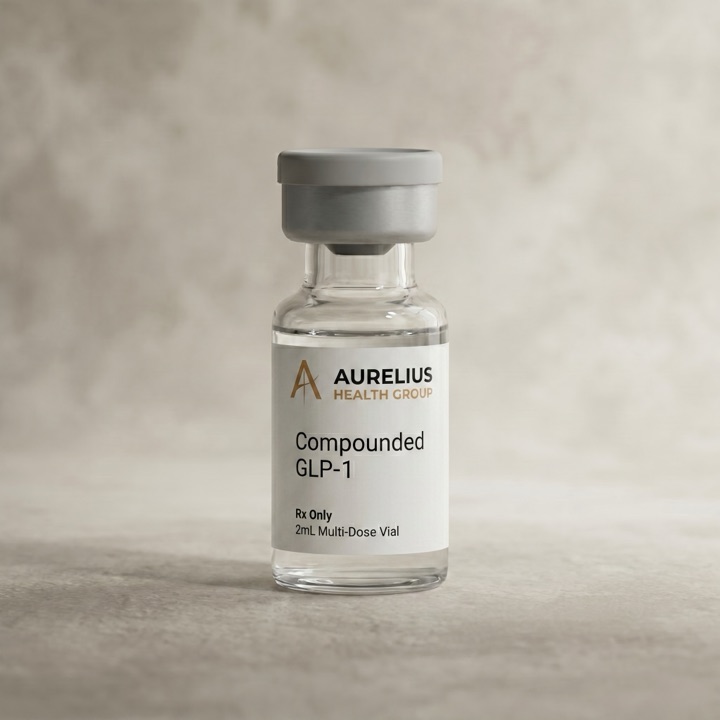
Who qualifies for tirzepatide comes down to three questions a clinician works through: what a person’s body mass index (BMI) is, whether a weight related health condition is present, and whether anything in the medical history rules the medicine out. For weight management, the FDA label for Zepbound covers adults with obesity, meaning a BMI of 30 or higher, and adults with overweight, meaning a BMI of 27 to under 30, who also have at least one weight related condition such as high blood pressure or abnormal cholesterol.
This guide walks through each route to tirzepatide eligibility, the conditions that count, and who the label says should not use it.
Key Takeaways
- Zepbound (tirzepatide) is FDA approved for long term weight management in adults with obesity, or adults with overweight plus at least one weight related comorbid condition, alongside a reduced calorie diet and more physical activity.
- The SURMOUNT-1 trial enrolled 2,539 adults with a BMI of 30 or more, or 27 or more with a weight related complication, and average weight loss at 72 weeks was 15.0% to 20.9% depending on dose, compared with 3.1% on placebo.
- Tirzepatide is also approved, as Zepbound, for moderate to severe obstructive sleep apnea in adults with obesity and, as Mounjaro, for blood sugar control in type 2 diabetes.
- The Zepbound label says tirzepatide must not be used by people with a personal or family history of medullary thyroid carcinoma, people with MEN 2, or anyone with a known serious allergy to tirzepatide.
- Tirzepatide is not recommended during pregnancy or in severe gastroparesis, and the safety and effectiveness of Zepbound have not been established in children.
What BMI do you need to qualify for tirzepatide?
For weight management, the label population is a BMI of 30 or higher on its own, or a BMI of 27 to under 30 combined with at least one weight related condition. The Zepbound prescribing information describes its weight trials as enrolling adults with obesity (BMI of 30 or more) or with overweight (BMI 27 to under 30) plus a qualifying condition. BMI is weight in kilograms divided by height in meters squared, and the CDC groups adults into the bands below.
| BMI range | CDC category | Weight management route on the label |
|---|---|---|
| Under 25 | Underweight or healthy weight | Not a candidate |
| 25 to under 27 | Overweight | Below the label threshold |
| 27 to under 30 | Overweight | Only with a weight related condition |
| 30 to under 35 | Class 1 obesity | Qualifies on BMI |
| 35 to under 40 | Class 2 obesity | Qualifies on BMI |
| 40 or greater | Class 3 (severe) obesity | Qualifies on BMI |
Sources: CDC Adult BMI Categories; Zepbound prescribing information.
In pounds, the CDC example for an adult who is 5 feet and 9 inches tall places 169 to 202 pounds in the overweight range and 203 pounds or more in the obesity range. Meeting the obesity threshold is common, since CDC survey data for August 2021 to August 2023 put adult obesity prevalence at 40.3%, and most trial participants sat well above the line: the mean baseline BMI in SURMOUNT-1 was 38.0, and 94.5% of participants had a BMI of 30 or higher.
The CDC describes BMI as a screening measure to be weighed with other factors, so prescribers also look at labs and medical history.
Which weight related conditions count at a BMI of 27?
At a BMI between 27 and 30, tirzepatide eligibility depends on having at least one weight related comorbid condition, and the Zepbound label names dyslipidemia, hypertension, obstructive sleep apnea and cardiovascular disease as examples from its trials. Because the label asks only for at least one such condition, the trial list is illustrative rather than complete, and clinicians commonly also consider conditions such as prediabetes or type 2 diabetes.
A BMI under 27 falls outside the labeled weight management population even when a related condition is present, because the trials did not study people at that weight.
How much weight did people lose in the trials behind these criteria?
People who met these BMI criteria lost substantially more weight on tirzepatide than on placebo. In SURMOUNT-1, published in the New England Journal of Medicine in 2022, average weight loss at week 72 was 15.0% on 5 mg, 19.5% on 10 mg and 20.9% on 15 mg, compared with 3.1% on placebo.
Figure 1
Average Weight Loss at 72 Weeks in SURMOUNT-1
Source: Jastreboff et al., N Engl J Med 2022 (SURMOUNT-1); adults without diabetes.
Response was common at every dose: 85%, 89% and 91% of participants on 5, 10 and 15 mg lost at least 5% of their body weight, compared with 35% on placebo, and 50% and 57% of those on 10 mg and 15 mg lost 20% or more, compared with 3% on placebo.
Figure 2
Share of SURMOUNT-1 Participants Who Lost at Least 5% of Body Weight
Source: Jastreboff et al., N Engl J Med 2022 (SURMOUNT-1).
Every participant also received lifestyle counseling, and because a trial average is not a prediction for any one person, individual results vary.
Can you qualify for tirzepatide with type 2 diabetes?
People with type 2 diabetes can qualify through two routes. As Mounjaro, tirzepatide is approved as an adjunct to diet and exercise to improve blood sugar control in type 2 diabetes in adults and in children 10 and older, and to lower the risk of major cardiovascular events in adults with type 2 diabetes at high risk (Mounjaro prescribing information). As Zepbound, the weight management indication does not exclude diabetes, which itself counts as a weight related condition.
The SURMOUNT-2 trial (Garvey and colleagues, Lancet 2023) tested tirzepatide for weight in 938 adults with a BMI of 27 or higher and type 2 diabetes with an HbA1c of 7 to 10%. At 72 weeks, average weight loss was 12.8% on 10 mg and 14.7% on 15 mg, compared with 3.2% on placebo, a smaller effect than in people without diabetes.
Figure 3
Average Weight Loss at 72 Weeks, With and Without Type 2 Diabetes
Sources: Jastreboff et al., N Engl J Med 2022; Garvey et al., Lancet 2023. SURMOUNT-2 did not test the 5 mg dose.
The Zepbound label reports that in this trial, blood sugar below 54 mg/dL occurred in 4.2% of people on tirzepatide versus 1.3% on placebo, and in 10.3% of those also taking a sulfonylurea compared with 2.1% of those who were not, so insulin and sulfonylurea doses are often adjusted. Our guide to Mounjaro vs Zepbound explains how the two brands differ.
Can you qualify for tirzepatide through sleep apnea?
Adults with obesity and moderate to severe obstructive sleep apnea (OSA) have a separate route, because Zepbound is approved to treat moderate to severe OSA in adults with obesity. In the SURMOUNT-OSA program, moderate to severe meant an apnea-hypopnea index (AHI) of 15 or more events per hour, and obesity meant a BMI of 30 or more.
The two 52 week SURMOUNT-OSA trials enrolled 469 adults whose mean baseline AHI was 51.5 and 49.5 events per hour. AHI fell by 25.3 events per hour on tirzepatide versus 5.3 on placebo in the trial without PAP therapy, and by 29.3 versus 5.5 in the trial with PAP.
Figure 4
Drop in Apnea Events per Hour at 52 Weeks, SURMOUNT-OSA
Source: Malhotra et al., N Engl J Med 2024 (SURMOUNT-OSA); 469 adults with obesity.
For this indication, the label maintenance dose is 10 mg or 15 mg once weekly, and our article on tirzepatide and sleep apnea covers what the approval means in practice.
Who should not take tirzepatide?
The Zepbound label lists two contraindications: a personal or family history of medullary thyroid carcinoma (MTC) or Multiple Endocrine Neoplasia syndrome type 2 (MEN 2), and a known serious hypersensitivity to tirzepatide or any of its ingredients. The thyroid contraindication sits under a boxed warning because tirzepatide caused thyroid C-cell tumors in rats, and whether it does so in humans is unknown; our tirzepatide and thyroid health guide explains the warning. The label also flags several situations that call for caution or a different plan:
- Pregnancy. The label says tirzepatide may cause fetal harm and should be stopped once a pregnancy is recognized.
- Oral birth control. The label advises switching to a nonoral method, or adding a barrier method, for 4 weeks after starting and for 4 weeks after each dose increase.
- Severe gastroparesis. The label states that Zepbound is not recommended for people with severe gastroparesis.
- Other GLP-1 medicines. Combining Zepbound with other tirzepatide products or any GLP-1 receptor agonist is not recommended.
- History that needs monitoring. Label warnings cover pancreatitis, gallbladder disease, kidney injury from dehydration, serious allergic reactions and diabetic retinopathy, so a history of these shapes how closely a prescriber follows someone.
Are there age limits for tirzepatide?
Zepbound is labeled for adults, and its safety and effectiveness have not been established in pediatric patients, while Mounjaro is approved for type 2 diabetes from age 10. The label sets no upper age limit, and in the pooled weight trials 226 (9%) of the participants treated with tirzepatide were 65 or older, with no overall differences in safety or effectiveness compared with younger adults.
What does a clinician check before prescribing tirzepatide?
Before prescribing, a clinician typically confirms BMI from a current height and weight, reviews weight related conditions, and screens for the contraindications above. Most also ask about pregnancy plans, contraception, past pancreatitis or gallbladder problems, gastroparesis, and every current medication, especially insulin and sulfonylureas.
If tirzepatide is a fit, label dosing starts at 2.5 mg once weekly for 4 weeks and then rises in 2.5 mg steps after at least 4 weeks until a maintenance dose of 5 mg, 10 mg or 15 mg is reached. Side effects are part of that conversation: in SURMOUNT-1 the most common adverse events were gastrointestinal, mostly mild to moderate and concentrated during dose escalation.
Figure 5
Stopped Treatment Because of Side Effects in SURMOUNT-1
Source: Jastreboff et al., N Engl J Med 2022 (SURMOUNT-1).
Frequently Asked Questions
The criteria above come from the labels for Zepbound and Mounjaro, the FDA approved brands of tirzepatide. Aurelius providers may prescribe compounded tirzepatide, which is not FDA approved and has not been reviewed by the FDA for safety or effectiveness.
Take the next step
Talk with a licensed provider
A 2 minute intake connects you with a licensed provider who reviews your health history and discusses whether treatment is appropriate for you.
$89 first month, then $199/month. Cancel anytime.
Start Your Journey Prescription only if clinically appropriate.