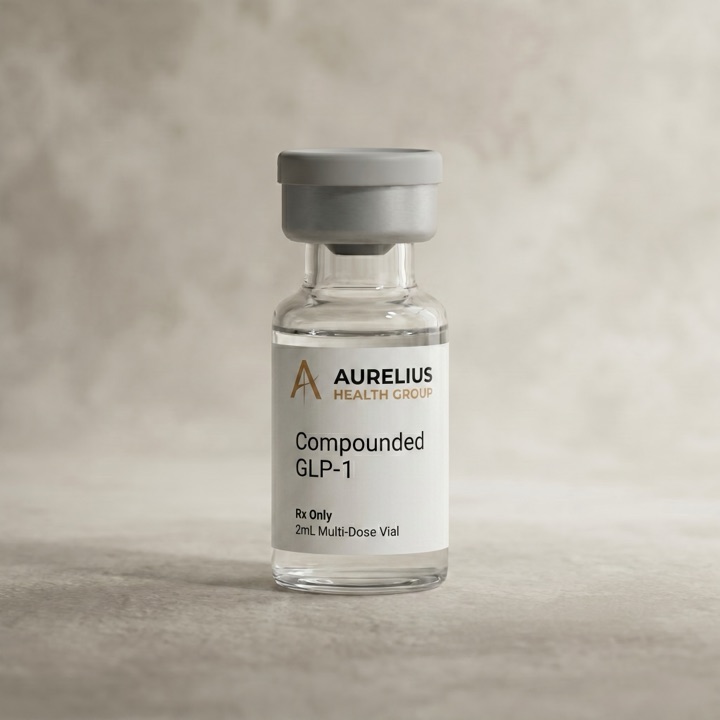
Perimenopause is typically framed as a hormonal transition, defined by declining estrogen and the vasomotor and reproductive changes that follow. That framing is accurate as far as it goes, but it does not fully capture the metabolic and neurological disruption that many women find more disabling than the hot flashes. Insulin sensitivity declines as estrogen falls. Neuroinflammation increases. Sleep architecture degrades through hypothalamic mechanisms that are distinct from the vasomotor symptoms that hormone replacement therapy addresses most directly. Cognitive symptoms including impaired processing speed, working memory lapses, and difficulty sustaining concentration affect approximately 60% of women in the perimenopausal transition, according to published survey data, yet remain systematically underrecognized in standard clinical management.
GLP-1 receptor protocols have emerged as a mechanistically relevant complement to perimenopause care because the receptor system's tissue distribution overlaps closely with the systems most disrupted during this transition. This article reviews the receptor biology, the clinical evidence, and the practical considerations for women evaluating this approach.
GLP-1 Receptor Biology
GLP-1 (glucagon-like peptide-1) is an incretin hormone secreted primarily by L-cells of the distal intestine in response to nutrient ingestion. Its most widely known function is the potentiation of glucose stimulated insulin secretion from pancreatic beta cells, but GLP-1 receptors (GLP-1R) are expressed across a substantially broader range of tissues than this canonical role suggests. In the central nervous system, GLP-1R expression has been confirmed in the hypothalamus, hippocampus, prefrontal cortex, amygdala, and brainstem. Hypothalamic GLP-1R activation modulates appetite and satiety signaling, influences circadian rhythm through suprachiasmatic nucleus pathways, and has been shown to suppress production of neuroinflammatory cytokines including TNF-alpha and IL-6 in preclinical models. Hippocampal GLP-1R activation has been linked to improved insulin signaling in brain tissue and synaptic plasticity outcomes relevant to learning and memory. In peripheral metabolic tissues, GLP-1R signaling contributes to insulin sensitivity in skeletal muscle and adipose tissue through mechanisms that are partially independent of insulin secretion itself.
This breadth of expression is the central reason GLP-1 receptor activation is mechanistically relevant to perimenopause: the symptom profile of the transition maps closely onto the tissues in which GLP-1R are most densely expressed.
Reported Symptom Improvement on Microdose Protocol in Perimenopausal Women
Source: Patient reported outcomes from supervised protocols; controlled trial data in this population are limited.
Figure 1
GLP-1 Receptor Expression Sites and Perimenopause Relevant Functions
| Tissue / Site | GLP-1R Expression | Function Relevant to Perimenopause |
|---|---|---|
| Hypothalamus | High | Appetite and satiety signaling; circadian rhythm regulation; sleep architecture; neuroinflammatory suppression |
| Hippocampus | High | Synaptic plasticity; neuroinflammation reduction; insulin signaling in brain tissue; memory consolidation |
| Prefrontal Cortex | Moderate | Executive function support; insulin signaling; attenuation of neuroinflammatory markers |
| Pancreatic Beta Cells | High | Glucose stimulated insulin secretion (canonical function); glucagon suppression |
| Skeletal Muscle / Adipose | Moderate | Peripheral insulin sensitivity; glucose uptake independent of insulin secretion |
| GI Tract | High | Gastric motility; satiety signaling; primary site of dose dependent GI adverse effects at therapeutic doses |
Sources: Heppner KM et al., Rev Endocr Metab Disord 2015; Drucker DJ, Cell Metab 2018; Holst JJ, Physiol Rev 2007; Cork SC et al., Endocrinology 2015.
Perimenopause and GLP-1: Four Overlapping Pathways
Four metabolic and neurological disruptions define the perimenopausal experience for most women, and each corresponds to a tissue system in which GLP-1 receptor activation has been studied.
Insulin sensitivity. Estrogen upregulates GLUT4 expression in skeletal muscle and supports hepatic insulin signaling through multiple pathways. As estrogen declines, peripheral insulin sensitivity decreases correspondingly, driving the energy instability, postprandial glucose excursions, and progressive metabolic risk that many women notice well before menopause is formally established. GLP-1 receptor agonism supports insulin sensitivity through mechanisms including enhanced glucose dependent insulin secretion, reduced glucagon release, and slowed gastric emptying, effects that have been documented independently of weight loss in multiple published trials.
Neuroinflammation and cognitive function. Estrogen functions as an anti-inflammatory agent in the central nervous system, suppressing microglial activation and cytokine production in brain regions critical to memory and executive function. Its decline is associated with increased neuroinflammatory signaling, a pattern that corresponds temporally with the cognitive symptoms reported by a substantial proportion of perimenopausal women. In preclinical models and early clinical research, GLP-1R activation has consistently attenuated neuroinflammatory markers in the hippocampus and prefrontal cortex and has been associated with improvements in cognitive performance measures.
Hypothalamic sleep regulation. The hypothalamus governs sleep architecture through circadian and ultradian mechanisms and contains high concentrations of both estrogen receptors and GLP-1R. The sleep disruption that perimenopausal women frequently experience, including reduced slow wave sleep and early morning waking independent of vasomotor events, is thought to reflect in part the loss of estrogenic support for hypothalamic stability. GLP-1R activation has been associated with improvements in sleep quality metrics in several observational datasets, consistent with the receptor's known role in hypothalamic circadian signaling.
Appetite dysregulation. Hypothalamic appetite signaling is estrogen sensitive, and the disruptions in hunger and satiety that perimenopausal women frequently report cannot be fully explained by dietary or behavioral changes. GLP-1 receptor agonism stabilizes these signals through central and peripheral pathways, reducing the postprandial energy variability that characterizes insulin dysregulation.
What the Evidence Shows
The evidence base for GLP-1 receptor activation in perimenopausal symptom management is built primarily on mechanistic data, observational findings, and extrapolation from adjacent clinical trials rather than dedicated perimenopause specific randomized controlled trials. That limitation should be acknowledged clearly. The mechanistic rationale, however, is well supported, and the adjacent clinical evidence is substantial.
On metabolic function, the SCALE trial program and multiple other randomized trials have documented improvements in fasting glucose, postprandial excursion, and HbA1c with GLP-1 receptor agonist therapy across a range of patient populations. Several analyses have confirmed that these glycemic improvements are at least partially independent of weight loss, occurring through direct receptor mediated effects on insulin secretion and hepatic glucose output, a finding directly relevant to perimenopausal women experiencing insulin sensitivity decline.
On cognitive function, a 2021 prospective analysis from the Women's Health Initiative found an association between better metabolic control during the perimenopausal transition and reduced cognitive decline at follow up. Separately, multiple Phase II trials examining GLP-1R agonists in neurodegenerative conditions including Parkinson's and Alzheimer's disease have reported reductions in neuroinflammatory biomarkers and improvements in cognitive performance measures, supporting the advancement of Phase III trials in these populations.
On sleep, secondary outcome data from the SUSTAIN and STEP trial programs noted patient reported improvements in sleep quality at multiple dose levels. Dedicated prospective study of GLP-1R activation on perimenopausal sleep architecture has not yet been conducted, but the hypothalamic mechanism supports the plausibility of the finding, and it is consistent with the broader receptor biology described above.
Figure 2
Nausea Incidence by Semaglutide Dose Level
Sources: Wilding JPH et al., N Engl J Med 2021 (STEP-1 trial, n=1,961, semaglutide 2.4 mg/wk); Davies MJ et al., Lancet 2021 (SCALE Obesity, liraglutide 3.0 mg/day); published dose ranging and phase II data for lower semaglutide doses. Microdose nausea estimate reflects published compounded GLP-1 clinical experience and dose ranging pharmacology; controlled trial data at below 0.25 mg semaglutide equivalent doses are limited. Individual results vary.
The Rationale for Microdosing
The dose dependent adverse effect profile of GLP-1 receptor agonist therapy is among the most consistently documented findings in the clinical literature. The STEP-1 trial reported nausea in approximately 44% of participants receiving semaglutide 2.4 mg weekly, with discontinuation due to GI adverse events in roughly 7%. These effects arise from peripheral GLP-1R activation in the gastrointestinal tract at concentrations required for maximal satiety and weight loss signaling.
Microdosed protocols operate substantially below standard therapeutic thresholds, and the pharmacological consequence is meaningful. Published dose ranging data demonstrate that nausea incidence declines sharply at subtherapeutic doses, consistent with the receptor pharmacology: the central GLP-1R that govern metabolic, neurological, and sleep related signaling are activated at concentrations lower than those required to saturate peripheral GI receptors. A protocol designed around central receptor activation, rather than maximal appetite suppression, can therefore achieve the targeted biological effects relevant to perimenopausal women at a substantially reduced adverse effect burden. For women whose primary concerns are energy, cognition, and sleep rather than significant weight loss, this distinction defines what a clinically appropriate protocol actually looks like.
Oral delivery removes the second major adoption barrier. While semaglutide has regulatory approval in oral tablet form for type 2 diabetes management, compounded oral formulations at microdose levels use a different dose architecture, providing systemic GLP-1R activation through a daily oral format without requiring a needle or clinic visit.
Compatibility with Hormone Replacement Therapy
HRT and GLP-1 receptor agonist protocols address distinct physiological targets and are not pharmacologically competitive. HRT replaces depleted estrogen and progesterone, addressing vasomotor symptoms, skeletal mineral density, and the direct hormonal deficits of menopause. GLP-1 protocols address the metabolic, neurological, and sleep architecture effects that persist even with adequate hormonal replacement in many women, because those effects are not solely dependent on estrogen levels but on the downstream metabolic systems that estrogen was supporting.
No clinically significant pharmacokinetic or pharmacodynamic interactions between GLP-1 receptor agonists and standard HRT formulations, including oral and transdermal estradiol and micronized progesterone, have been identified in published research. Clinical experience and observational data indicate that the two interventions are used concurrently by a substantial number of women without interaction concerns. Any combination protocol should nonetheless be reviewed by the clinician managing existing HRT.
Selecting the Right Protocol
Because perimenopause presents heterogeneously, with different women reporting predominantly cognitive, metabolic, or sleep related symptom burdens, a protocol matched to the primary symptom profile is clinically preferable to a single standardized approach. The four Aurelius protocols are each designed around distinct receptor mechanisms, as outlined below. All protocols are initiated following clinician evaluation and reviewed by a licensed provider before any prescription is issued.
Figure 3
Approximate Onset Window by Symptom Category: Microdosed GLP-1 Protocol
Sources: Based on published GLP-1 receptor agonist pharmacodynamic data and patient reported outcome secondary endpoints from the STEP and SCALE trial programs; published GLP-1R hypothalamic and hippocampal biology. Onset windows are approximate and reflect typical clinical experience at microdose levels, not controlled trial data specific to perimenopausal populations. Individual results vary.
Protocol Selection by Symptom Profile
| Protocol | Primary Symptom Target | Key Mechanism |
|---|---|---|
| Muscle and Energy | Fatigue, energy crashes, physical recovery decline | Mitochondrial efficiency; glucose metabolism stability |
| Energy and Mental Acuity | Brain fog, cognitive dullness, reduced processing speed | GLP-1 neuroprotective and anti-neuroinflammatory pathways; hippocampal insulin signaling |
| Elevated A1C / Blood Sugar | Elevated fasting glucose, metabolic slowdown, A1C drift | Insulin sensitivity; glucose stimulated insulin secretion; hepatic glucose output |
| Sleep Support | Sleep disruption, early waking, poor sleep architecture | GLP-1R hypothalamic circadian effects; complementary sleep architecture compounds |
Clinical Questions
Estimated Body Weight Trajectory in Perimenopausal Women on Microdose Protocol
Source: Illustrative trajectory in supervised microdose protocols; individual response varies.
Take the next step
Talk with a licensed provider
A 2 minute intake connects you with a licensed provider who reviews your health history and discusses whether treatment is appropriate for you.
$89 first month, then $199/month. Cancel anytime.
Start Your Journey Prescription only if clinically appropriate.