Sleep Support Stack — Five-Compound Sleep Architecture Protocol | Aurelius Health

New patient intro: $89 first month, then $199/month. Cancel anytime.

Aurelius Health GroupSleep Support
Now Accepting New Patients

Eight hours in bed with almost no deep sleep.

Five compounds, physician prescribed, designed around the metabolic and neurological factors your sleep tracker keeps flagging. No clinic visits required.

Microdose, physician prescribed
Five compound stack shipped to your door with no clinic visits required.
Five mechanisms, one protocol
Metabolic, circadian, GABA, methylation, and alpha wave pathways addressed with a compound assigned to each.
Deep Sleep Protocol
Board certified MD prescribed with a 24 hour turnaround.
Physician Supervised Protocol
5-Compound Microdose Protocol
HIPAA Compliant Telehealth
Board Certified MDs and DOs Only

The problem

You have fixed the inputs and the sleep is still suffering.

Dark room, cold temperature, no screens, magnesium, melatonin. The routine is locked in and yet the Oura ring still shows 45 minutes of deep sleep. The inputs are not the problem. Something upstream is driving the disruption.

Nighttime glucose spikes

Post-dinner glucose variability drives cortisol release at 2 to 3am. It is the metabolic layer most sleep supplements cannot reach, which is why Tirzepatide is central to this protocol.

Your internal clock has drifted

NAD+ drives SIRT1, the protein behind circadian clock genes. As NAD+ declines with age, the clock drifts and deep sleep shrinks. The molecular machinery is running low on fuel.

Cortisol will not switch off

High evening cortisol is the most common reason people lie awake, and the mechanism most sleep products skip. Magnesium's role in GABA receptor signalling and cortisol regulation is well documented, which is why magnesium glycinate is central to this stack.

You sleep eight hours and still wake up tired

Persistent fatigue despite eight hours is an architecture problem rooted in slow-wave sleep quality. B12 methylation drives the neural repair that should occur during those stages, yet suboptimal B12 is rarely identified in standard care.
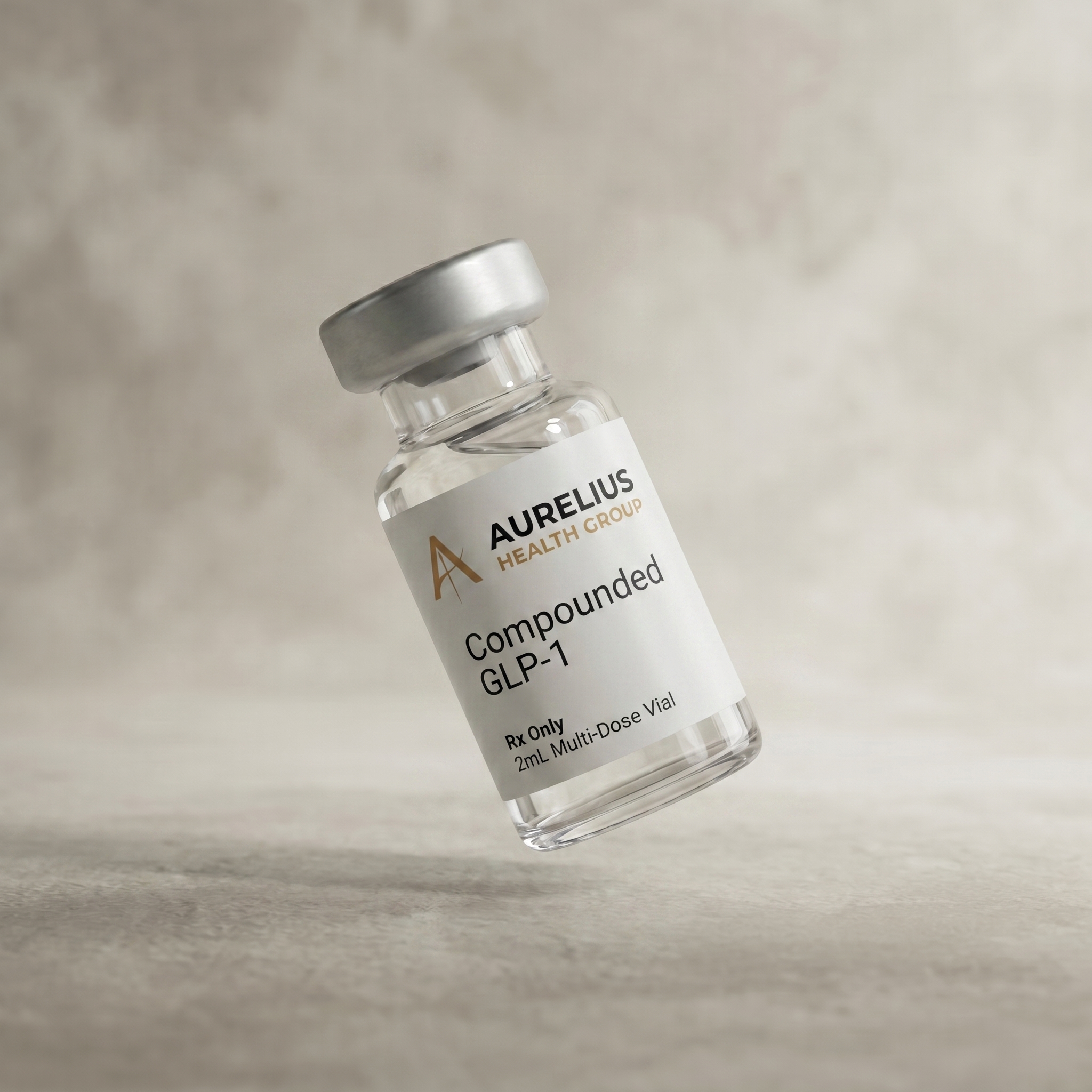
Aurelius compounded protocol

Benefits you'll Experience

Optimize and track your sleep with physician-prescribed protocols, evaluated to your biology and shipped to your door.

76%

of participants reported improved sleep quality in GLP-1 metabolic research within 30 days*

83%

of tirzepatide metabolic study participants reported improved sleep onset in published research*

71%

reduction in nighttime waking markers in Magnesium + L-Theanine supplementation research*

88%

of NAD⁺ study participants reported improved morning recovery and wakefulness in published trials*

* Based on published clinical literature, not specific to Aurelius patient outcomes. Individual results vary based on physician evaluation and health profile.

How We Compare

The microdose stack versus the alternatives

Aurelius Microdose Stack
Injectable GLP-1
OTC Supplement
Physician prescribed
Yes
Yes
No
Metabolic root cause (glucose)
Tirzepatide
Not targeted
No
Circadian NAD+ support
NAD+ included
Not included
Varies
GABA / cortisol support
Magnesium included
Not included
Varies
Alpha wave / calm focus
L-Theanine included
Not included
Varies
Physician monitoring
Yes, included
Depends
No

The process

From questionnaire to physician in under 24 hours

015 minutes

Medical intake

Short health questionnaire covering sleep history, metabolic background, current supplements and medications. If you track with Oura, Whoop, or a CGM, you can share that data. Informed consent before anything proceeds.

02Physician prescribed

Protocol prescribed and shipped

Your board certified MD or DO reviews your intake within 24 hours and prescribes your starting protocol. The full microdose protocol of Tirzepatide, NAD+, B12, Magnesium, and L-Theanine ships from a licensed pharmacy directly to your door.

03Monthly

Monitoring and ongoing support

Monthly check ins keep your physician informed of how you are responding, with the protocol adjusted at physician discretion. Secure messaging with your care team is included and you can cancel anytime.

Transparent pricing

One monthly subscription. No surprises.

Physician consultations, the full five compound stack, and ongoing physician support are all included. Full pricing is shown before any charge.

Deep Sleep Protocol

$89first month

then $199/month

Cancel anytime before next billing cycle. No hidden fees.

Initial physician consultation
Full stack: Tirzepatide, NAD+, B12, Magnesium, L-Theanine
Medication shipped directly to your door
Monthly check ins and protocol management
Secure messaging with your care team
Ongoing physician oversight and protocol management

Tirzepatide is compounded and shipped from a licensed pharmacy. Full pricing is presented before any charge is made. Subject to physician approval and state availability.

Check My EligibilityReview the Research

Eligibility

Connect with a licensed physician today.

Complete a short health intake and your assigned board certified physician reviews everything within 24 hours. Physician review is required before any protocol is initiated.

Aurelius Health Group is a telehealth platform. We connect patients with licensed physicians. We do not provide diagnoses or prescriptions directly. All medical decisions are made by your assigned licensed clinician. Tirzepatide requires physician evaluation and a valid prescription. Not available in all states.

See If You Qualify

Takes about 5 minutes. Your physician responds within 24 hours.

Frequently Asked Questions

Everything you need to know

Why Tirzepatide is in a sleep protocol, what NAD+ does to your circadian clock, how monitoring works, and what distinguishes this approach from anything available over the counter.

Sleep Support protocol

The Sleep and Recovery Stack is a physician supervised microdose protocol combining compounded microdose tirzepatide, NAD+, methylcobalamin (B12), magnesium glycinate, and L-Theanine. Five compounds addressing five distinct mechanisms: metabolic, circadian, methylation, GABA, and alpha wave activity. The stack is designed for people whose sleep architecture is the problem rather than their sleep hygiene. Most patients have already tried melatonin, magnesium glycinate alone, and sleep hygiene protocols without getting the deep sleep or REM improvement their tracker keeps flagging. A board certified MD or DO reviews your intake within 24 hours, and the full protocol ships from a licensed compounding pharmacy. No sedatives, no clinic visits. Compounded tirzepatide is not an FDA approved finished drug product.

GLP-1 receptors are expressed in the dorsomedial hypothalamus, which is involved in circadian biology, and in brain regions associated with sleep architecture. Published research links GLP-1 receptor activation to changes in sleep stage distribution, reduced inflammation associated with deep sleep disruption, and improved insulin sensitivity. Insulin dysregulation is a recognized contributor to fragmented sleep. Compounded microdose tirzepatide is prescribed at doses well below those used for weight loss; the role in this stack is metabolic and circadian support, not weight loss. All prescribing decisions are made by the supervising physician based on your clinical profile. Individual results will vary.

Standard sleep supplements generally address one or two pathways. Melatonin signals circadian timing. Magnesium oxide or citrate, the most common forms in OTC supplements, are poorly absorbed and may not reach the GABA receptor or cortisol mechanisms. L-Theanine in OTC products is often at subtherapeutic doses. The Sleep and Recovery Stack addresses five distinct mechanisms with pharmaceutical grade dosing and physician supervision. Compounded tirzepatide and methylcobalamin are prescription components that no OTC supplement can include. The stack is calibrated to your biology by a physician rather than assigned at a fixed manufacturer dose.

Each addresses a distinct sleep onset mechanism. Magnesium glycinate supports GABA receptor activity and may help reduce excess cortisol, two common inhibitors of sleep onset. The glycinate form crosses the blood-brain barrier more readily than oxide or citrate, which most OTC products use. L-Theanine promotes alpha wave brain activity and may counteract stress driven sympathetic arousal, addressing the racing mind pattern without causing sedation or morning grogginess. Together they target two distinct sleep onset mechanisms that single compound supplements may miss. The doses in the stack reflect published clinical research, not the subtherapeutic levels common in OTC sleep blends.

This is the audience the stack was designed for. Most patients on the protocol have a wearable showing one or more of: low deep sleep, low REM, high heart rate variability declines overnight, or extended sleep latency. Many patients report measurable changes in deep sleep duration, REM percentage, or HRV recovery within 4 to 8 weeks of starting the protocol. Trackers are not diagnostic, and individual results vary; the protocol is appropriate when the data supports what subjective experience is already telling you. Your physician evaluates whether the stack is clinically appropriate for your specific situation.

No. Z-drugs (Ambien, Lunesta) and benzodiazepines (Xanax, Klonopin, Valium) work by binding to GABA-A receptors and producing sedation; they are controlled substances with documented dependence risk, withdrawal effects, and complex relationships with sleep architecture, often suppressing REM and deep sleep despite producing sleep onset. The Sleep and Recovery Stack does not bind GABA-A receptors directly, does not produce sedation, and is not a controlled substance. The stack is not a replacement for prescribed sleep medications, and patients on benzodiazepines or Z-drugs should discuss any new protocol with their prescribing physician before making changes.

For most patients, no. Unlike sedative sleep medications, the components of the stack do not produce next-day drowsiness or cognitive impairment when used at prescribed doses. L-Theanine is selected specifically because it promotes alpha wave activity without sedation, addressing racing thoughts at night without producing morning grogginess. Magnesium glycinate is well tolerated and does not cause the lingering sedation associated with antihistamine sleep aids. A small subset of patients report mild morning fatigue during the first one to two weeks of titration, typically resolving as the dose stabilizes. If morning function declines on the protocol, your physician adjusts the dose.

Generally yes, with physician review. Most patients starting the stack are already taking melatonin and one or more magnesium supplements. The typical clinical recommendation is to discontinue OTC magnesium, since the stack includes pharmaceutical grade magnesium glycinate at appropriate dose, and either continue or taper melatonin based on individual response. Melatonin can be useful for circadian timing in shift workers and travelers but is often dosed too high in OTC products. Your physician reviews your full supplement stack at intake and recommends what stays, what tapers, and what is replaced.

The Sleep and Recovery Stack is not a treatment for sleep apnea, and patients with diagnosed obstructive sleep apnea should continue CPAP, dental device, or other prescribed treatments. GLP-1 medications have published research showing associations with sleep apnea severity improvements in patients with obesity; tirzepatide has Phase 3 data in this area. The stack may produce indirect effects through metabolic improvements, but the protocol's primary aim is sleep architecture support in patients without diagnosed apnea. Discuss your specific situation with your supervising physician.

High evening cortisol is a common contributor to difficulty falling asleep despite proper sleep hygiene, and it is the mechanism many sleep products do not address. Magnesium glycinate's role in GABA receptor signaling and cortisol regulation is documented in published research, which is why the glycinate form is central to the stack rather than the cheaper oxide or citrate forms. L-Theanine addresses cognitive arousal through alpha wave promotion. Compounded microdose tirzepatide may support reduction in systemic neuroinflammation associated with elevated nighttime cortisol. Many patients with the racing mind pattern report subjective improvement within 2 to 4 weeks. Individual results will vary.

Most patients report subjective changes in sleep onset and morning grogginess within the first one to two weeks. Measurable changes on Oura, Whoop, or similar trackers, including deep sleep duration, REM percentage, sleep latency, and overnight HRV, typically appear at 3 to 6 weeks as cortisol patterns normalize and circadian regulation improves. The full effect of compounded microdose tirzepatide on sleep architecture usually emerges between weeks 6 and 12. Tracker data should be averaged across at least 7 to 14 nights for meaningful comparison; single night readings are noisy. Individual results vary, and a small percentage of patients are non-responders, typically identified by week 6.

No. Unlike sedative sleep medications, the Sleep and Recovery Stack does not produce physical dependence, withdrawal symptoms, or rebound insomnia when discontinued. Magnesium glycinate, L-Theanine, NAD+ precursors, and B12 are not habit forming. Compounded tirzepatide is not associated with psychological dependence and can be stopped without a dependence taper. Some patients prefer to stay on the protocol long-term for sustained sleep architecture support; others use it for 3 to 6 months to reset sleep patterns and then continue with lifestyle and OTC support. The protocol is a monthly subscription with no commitment; you can pause or stop at any time.

From the Journal

Research that informs this protocol

Sleep biology

GLP-1 and Sleep Architecture

GLP-1 receptors in the dorsomedial hypothalamus regulate circadian biology and sleep stage distribution.

Cognition

GLP-1 and Brain Fog

Mechanistic review of GLP-1 receptor activation in the hippocampus and cortex. Beyond sleep apnea coverage.

Women's health

GLP-1 for Perimenopause

GLP-1 receptor biology and microdosed protocols for perimenopausal sleep architecture changes.

Browse all articles →

Sleep Support · Physician Supervised Protocol

Your sleep data has been telling you something and this protocol is built to match what it is showing.

Five compounds and five mechanisms in one microdose protocol built for people who know their sleep data and want a physician supervised approach. No sedatives, no clinic visits required.